

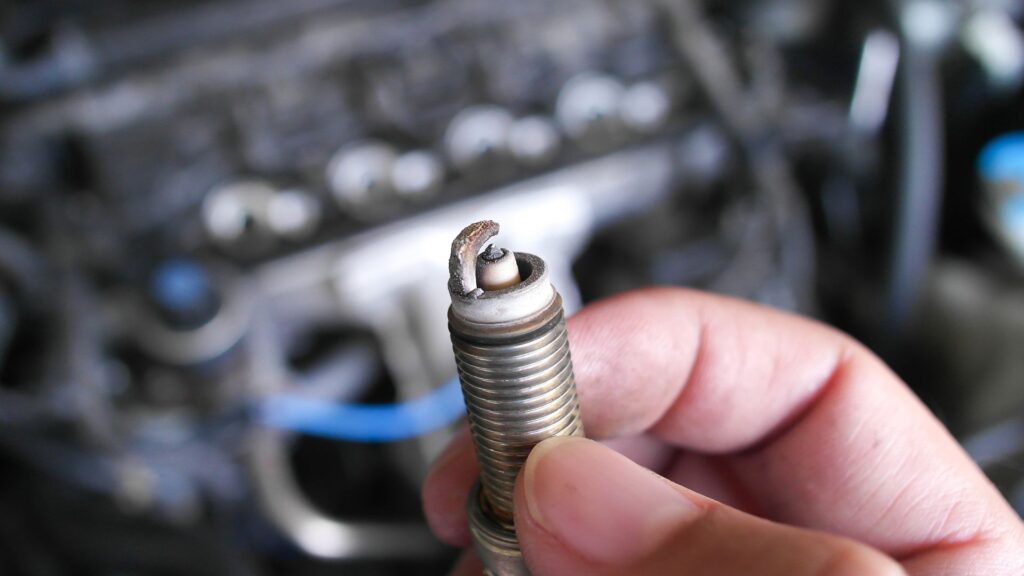
How Often to Change Spark Plugs (And the Signs You Shouldn’t Ignore)
If you have ever wondered how often to change spark plugs, you are not alone. For many drivers in Henry County, IN, spark plugs are out of sight and out of mind until something feels off.
The car hesitates, the engine misfires, or the check engine light suddenly comes on.
The truth is, your spark plug plays a small but powerful role inside your engine. When it starts to fail, your whole vehicle feels it. Let’s break down when spark plugs need attention, how to spot trouble early, and why staying ahead of the problem can save you money and protect your engine long term.
What Does a Spark Plug Actually Do?
Inside every internal combustion engine, your spark plug has one job – to ignite the mixture of fuel and oxygen in the combustion chamber. It uses high-voltage electricity from the ignition coil to create an electric spark between its electrode and ground strap. That tiny electric arc ignites gasoline, creating controlled combustion.
This combustion pushes the piston down, turning the crankshaft and generating the energy that moves your car forward.
Spark plugs contain a center electrode, typically made with materials like copper, platinum, or iridium, designed to handle extreme heat and electrical resistance and conductance. Over time, carbon buildup, oil contamination, and general wear reduce their ability to produce enough spark.
When that happens, your engine may misfire, idle roughly, and lose fuel economy in automobiles.
How Often Should You Change Spark Plugs?
The honest answer? It depends on the vehicle.
Many older vehicles require a spark plug change every 30,000 miles. Today, modern designs last much longer. Iridium spark and platinum plugs are built to handle higher heat and last longer than traditional copper plugs.
As a general guideline:
- Standard copper plugs: replaced every 20,000 to 30,000 miles
- Platinum plugs: replaced every 60,000 miles
- Iridium plug designs: can reach 80k miles or even 100k
Some manufacturers even recommend replacement every five years, regardless of mileage.
But should you change them exactly? The real change interval depends on your make and model, your driving habits, and the specific type of spark plug installed from the factory. Your maintenance schedule is the best place to start.
If you drive a Toyota, for example, many models come equipped with iridium spark components that can approach 100k. Other vehicles may wear out faster, especially if driven in stop-and-go traffic around Henry County.
If you are unsure and want to know how often to change spark plugs in your specific vehicle, a trusted mechanic can check the service history and inspect the set of spark plugs directly.
Signs Your Spark Plugs Need Changing
Sometimes plugs need to be changed before the recommended interval. Spark plugs are usually tough, but they are not indestructible.
Here are warning signs you should not ignore:
Trouble Starting or Hard to Start
If your car is hard to start, your spark plug may not be creating enough spark to ignite the air and fuel mixture. This forces your electric battery to work harder and puts strain on your ignition system.
Rough Idle or Engine Misfires
A rough idle feels like shaking or vibration when your car is sitting still. Engine misfires occur when one cylinder does not fire correctly, often due to faulty spark plugs. Even one plug failing can cause a noticeable misfire and reduced acceleration.
Check Engine Light
Your check engine light may illuminate if the ignition system detects irregular combustion events. Modern vehicles monitor speed, fuel injection, oxygen levels, and more. When a plug malfunctions, sensors often catch it quickly.
You might need advanced computer diagnostics for your vehicle to pinpoint the exact cause.
Poor Fuel Economy
Worn spark plugs can lead to poor fuel economy because incomplete combustion wastes gas from your tank. That inefficiency can lead to higher fuel costs and reduced overall fuel economy.
Over time, that adds up.
Sluggish Acceleration
If your car feels slower getting up to speed, worn spark plugs may be to blame. Weak combustion reduces available power and affects how smoothly the engine runs.
If you notice any of these symptoms, it is a good idea to check your plugs sooner rather than later.
What Happens If You Wait Too Long?
Spark plugs aren’t expensive compared to many other auto parts. But ignoring them can cause damage, that is. Old spark plugs that begin to wear can increase electrical resistance. That added strain may damage your ignition coils or distributor. In severe cases, it can even cause engine knocking.
When combustion is incomplete, excess carbon can build up in the combustion chamber. That buildup may damage your engine or lead to poor engine performance. Sometimes, faulty spark plugs may even allow unburned fuel to enter the exhaust system.
If you delay service long enough, you might be looking at more costly repairs than a simple spark plug change.
Understanding Different Spark Plug Materials
Not all plugs are the same. The material at the electrode tip determines how long they last and how reliably they ignite fuel.
- Copper plugs conduct electricity well but wear out faster.
- Platinum plugs offer improved durability over copper.
- Platinum plugs and iridium plug versions resist wear thanks to tough metals like iridium and sometimes tungsten.
- Iridium spark designs often last much longer and handle high voltage efficiently.
Choosing the correct type of spark plug depends on the original manufacturer’s recommendation. Installing the wrong type can affect performance and longevity.
Can You Change Spark Plugs Yourself?
If you are handy, you can change plugs at home. But it is not as simple as it sounded years ago.
Modern engines often place plugs deep inside the spark plug well, sometimes under intake components or near sensitive electrical connector systems. You may need to remove the plugs carefully to avoid stripping threads in the cylinder head.
You will also want the correct gap setting on each new plug. Improper installation can cause misfire, damage, or premature failure.
Before you want to remove anything, consider whether you have the right tools and torque specifications. Many drivers prefer having a mechanic handle it to ensure everything is done correctly.
Why Professional Inspection Matters
Every car ages differently. Spark plugs last longer in some engines and wear out faster in others, depending on driving conditions, fuel injection quality, oil consumption, and even the climate in the atmosphere of Earth.
At Don & Joe’s Auto Service, the team can inspect your old plugs for signs of abnormal wear, oil fouling, or carbon buildup. That inspection can reveal deeper issues within the engine to run properly. If something more serious is found, their expert engine repair services can address it early.
Routine preventative maintenance services also help avoid long-term problems.
And if your diagnostics system shows a trouble code, their advanced computer diagnostics for your vehicle can determine whether the issue is spark plugs, ignition coils, fuel injectors, or something else entirely.
How to Know It Is Time to Replace Your Spark Plugs
If you are wondering how often you should replace them, start by asking a few basic questions:
- Has it been close to the recommended change interval for your make and model?
- Are you experiencing trouble starting, a rough idle, or decreased speed performance?
- Has your check engine light come on recently?
Spark plugs may not seem urgent at first. But small misfires can grow into bigger issues. Over time, old plugs get worn, with spark erosion on the electrode, reducing their ability to consistently ignite gasoline.
Eventually, spark plugs should be replaced before they cause unnecessary strain on other components.
If you do decide to change the spark plugs, it is wise to replace the full set rather than one plug at a time. This keeps performance balanced across every cylinder.
A Local, Trusted Approach in Henry County, IN
In Henry County, IN, drivers have trusted Don & Joe’s Auto Service for decades because of their straightforward approach. Since 1977, their team has focused on accurate testing, honest
recommendations, and reliable service.
Whether you need a routine spark plug change or full professional auto repair services, their ASE-certified technicians use modern equipment and real-world experience to get it right the first time. They understand that every vehicle is different. The right advice depends on the make and model, mileage, and how you drive.
Conclusion
Knowing how often to change spark plugs protects your engine, improves performance, and saves money over time. If your car feels different, struggles to start, or shows a check engine light, do not ignore it. Small issues can grow quickly.
The team at Don & Joe’s Auto Service in Henry County, IN, can inspect your spark plugs, explain what they find, and recommend the right next step. Call 765-529-3555 or schedule an appointment online to keep your vehicle running strong and dependable.