

Car Won't Start, But The Battery Is Good? Here's What's Really Going On
You turn the key, and nothing happens. Or maybe you hear a click, or the dash lights flicker, but the engine just refuses to cooperate. You’ve already checked the battery; it’s fine. So what’s the problem?
This is one of the most frustrating situations a driver can face. The good news is that a battery is only one piece of the starting puzzle. Several other components have to work together every time you try to start the car, and any one of them can fail without warning.
Let’s break down the most common reasons why your car won’t start even when the battery is good.
What Actually Happens When You Turn the Key
Understanding the starting system helps you troubleshoot the problem more effectively. When you turn the key or press the start button, a signal travels through the ignition switch to the starter relay, which then sends power from the automotive battery to the starter motor. The starter motor spins the engine over, and once combustion begins, the engine runs on its own.
If any part of that chain breaks down, the switch, the relay, the starter, the wiring, or even the fuel system, your car won’t crank, even with a fully charged battery.
Common Reasons Your Car Won’t Start (With a Good Battery)
The Starter Motor Has Failed
The starter motor is one of the most common culprits. When you hear a loud click or rapid clicking noises, but the engine doesn’t turn over, that often points to a bad starter. The click when you try to start the engine is the solenoid engaging, but without enough mechanical force, the engine won’t move.
A faulty starter motor can also cause complete silence when you turn the key. f the dash lights come on but there’s complete silence when you turn the key, the starter or starter relay may have given out entirely. This is often described as a situation where everything works fine electrically, but the engine itself won’t crank.
Corroded or Loose Battery Connections
Even when the battery is fully charged and passes a load test, corroded battery terminals can block the flow of electricity. Corrosion builds up on the battery post and battery cable connections over time, and even a small amount of buildup can prevent enough cranking amps from reaching the starter.
Check the battery connections closely. If you see a white or greenish buildup where the cable meets the terminal, that could be your problem. Loose or corroded battery clamps cause the same issue; the battery voltage is fine, but the current can’t get through. Cleaning the battery terminals and tightening the connections is a simple fix that’s easy to overlook.
A Failing Alternator
Many drivers assume their car battery is the issue when, in reality, it’s a bad alternator that slowly drained it overnight. The alternator charges the battery while the engine runs. If you have alternator problems, the battery drains even when you think it’s holding a charge.
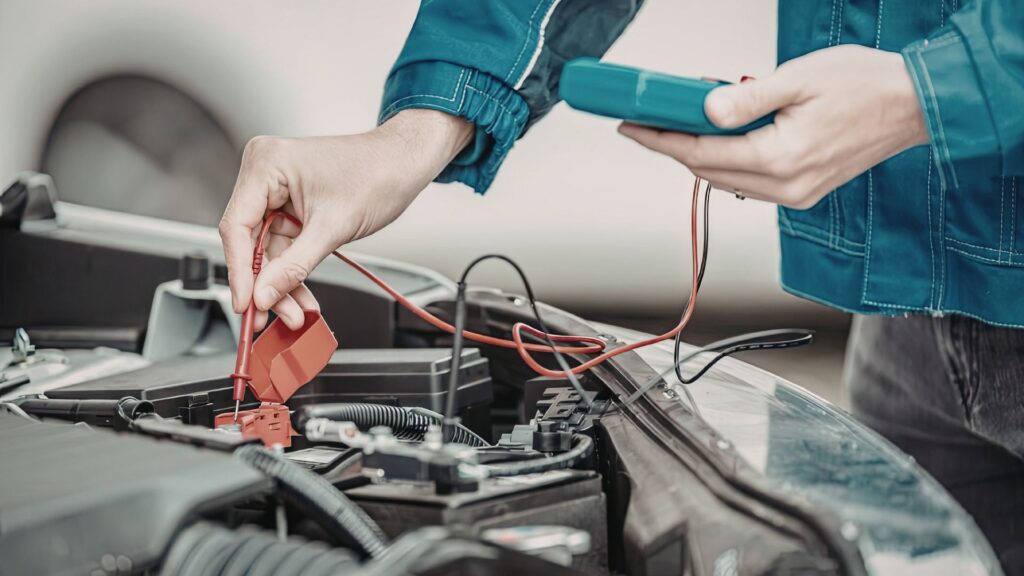
A battery and alternator issue often looks identical from the driver’s seat. If your battery is good but keeps dying, or your car starts fine for a day or two after a charge and then fails again, alternator problems are worth investigating. A mechanic can test the alternator’s output voltage with a multimeter to determine whether it’s the source of your starting problems.
The Ignition Switch Is the Problem
The ignition switch is what sends the initial signal when you turn the key. If it fails, the starting system never gets that command, even if every other component is in perfect condition.
A failing ignition switch can cause intermittent starting issues where the car starts sometimes but not others. You might notice that the dashboard lights come on but the engine doesn’t respond when you try to start the car. An electrical wiring fault inside the switch or a worn-out contact is enough to cause a complete no-start condition.
A Bad Fuel Pump
Sometimes the issue isn’t electrical at all; it’s the fuel system. If the fuel pump fails, the engine gets no gas, and it simply won’t start, no matter what.
One way to check is to listen carefully when you first turn the key to the “on” position, before you crank. A working fuel pump makes a brief humming sound as it pressurizes the fuel system. If you hear nothing, the fuel pump could be the issue. A mechanic with the right diagnostic tools can confirm this quickly.
Neutral Safety Switch or Brake Sensor
If you drive an automatic, the neutral safety switch prevents the engine from starting unless the gear selector is in park or neutral. A faulty switch can trick the car into thinking it’s in gear, which stops the car from starting entirely.
Similarly, many modern vehicles require you to press the brake pedal to start the engine. If the brake sensor fails, the system may not recognize that the brake is being applied, and the car won’t respond when you push the start button or turn the key.
A Blown Fuse
It sounds simple, but a blown fuse in the fuse box can cut power to the starting system or the fuel pump. Before spending money on bigger repairs, it’s worth having a mechanic check the fuse box for any failed fuses related to the ignition or fuel circuits.
Should You Try to Jump Start the Car?
A jump start only helps if a dead battery or a weak battery is the actual problem. If the battery is good and something else is causing the issue, using jumper cables and jumper clamps won’t solve the problem; it just rules out a dead battery as the cause.
If you get a jump start and the car starts, then dies shortly after, that points toward a bad alternator failing to recharge the battery while driving. If the jump start does nothing at all, the issue is likely the starter motor, ignition switch, or another component in the starting system.
What to Do If You’re Still Stuck
At this point, you’ve checked the battery connections, tried turning the engine over, listened for clicks or silence, and maybe even attempted a jump start. If the car still won’t start and you can’t pinpoint the issue, it’s time to bring in a professional.
The team at Don & Joe’s Auto Service in Henry County, IN, uses advanced vehicle computer diagnostics to accurately identify what’s stopping your car from starting. Whether it’s the starter, alternator, ignition switch, fuel pump, or an electrical wiring fault, their certified technicians have the tools and experience to find the real problem fast.
You can also explore their expert engine repair and diagnostics if the starting issue turns out to be engine-related, or check out their scheduled preventative maintenance services to help prevent these kinds of surprises down the road.
Don’t let a no-start situation leave you guessing. Their professional auto repair services are built around getting you back on the road the right way, the first time.
Conclusion
A good battery is important, but it’s only one part of what it takes to start your car. From a faulty starter motor and bad alternator to corroded terminals, a failing ignition switch, or a fuel pump that’s given up, there are several reasons why your vehicle could have trouble starting. If you’ve run through the basics and you’re still stuck, the smart move is to let an experienced mechanic take a look.
Schedule an appointment with our team at Don & Joe’s Auto Service and get the real answer.