

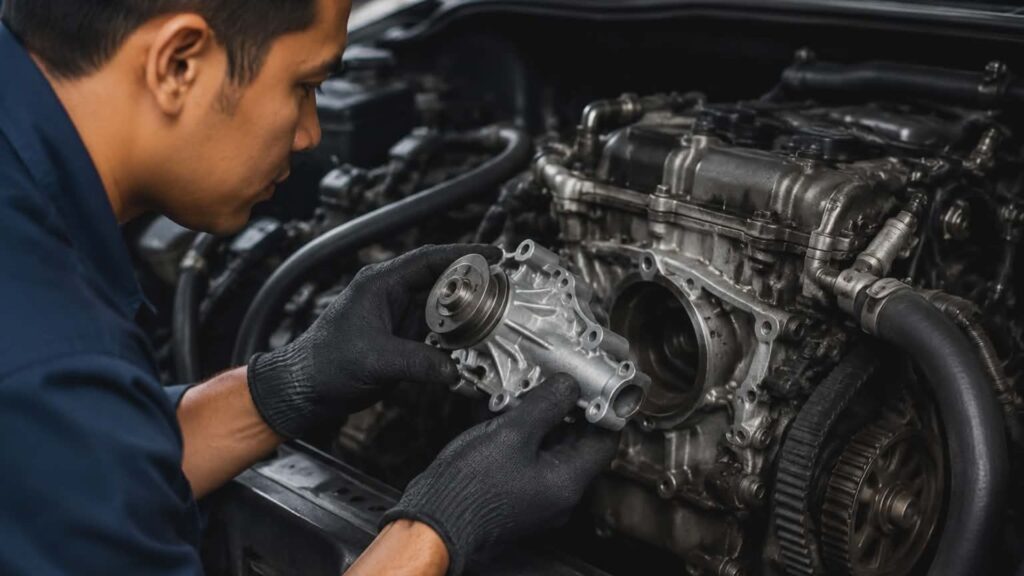
7 Clear Signs Of Car Water Pump Failure You Shouldn't Ignore
Your car’s water pump works quietly in the background, keeping your engine from turning into a very expensive piece of scrap metal. But when it starts to fail, the consequences can be serious – and fast. Knowing the signs of a failing water pump early can save you from a blown head gasket, a damaged cylinder head, or complete engine failure.
Here’s what to watch for before things get worse.
What A Car Water Pump Does And Why It Matters
Understanding how the water pump works helps explain why it’s so important. The car’s water pump plays a central role in your engine’s cooling system. It uses an impeller – a spinning blade inside the pump – to circulate coolant from the radiator through the engine block and cylinder head, then back again. This constant loop pulls heat from the engine and keeps the engine temperature in a safe range.
The pump is driven by either the serpentine belt or the timing belt, depending on your vehicle. When the water pump fails, coolant stops moving, the engine temperature spikes, and you’re looking at serious damage to your engine in a matter of minutes.
7 Signs Your Water Pump Is Failing
Engine Overheating – The Most Obvious Warning Sign
When the engine is overheating, it’s one of the most obvious signs that something is wrong with your cooling system. If the pump cannot move coolant properly, heat builds up fast. You’ll notice the temperature gauge climbing toward the red zone.
Engine overheating isn’t just inconvenient – continuing to drive with a failing water pump is extremely risky. An overheated engine can warp the cylinder head, crack the engine block, or destroy internal components entirely.
Coolant Leaks Around The Water Pump Area
A water pump leak is one of the earliest and most common signs of a failing water pump. The pump has seals and gaskets that degrade over time due to heat, pressure, and wear and tear. When the pump gasket fails, coolant begins seeping out.
You might notice a puddle of coolant – usually green, orange, or pink liquid – forming around the front of the engine or beneath your vehicle after it’s been parked. If you spot coolant collecting around the water pump area, get the water pump checked before the leak gets worse.
Steam Coming From The Radiator Or Hood
Steam rising from under your hood is never a good sign. When coolant can’t circulate properly due to a malfunctioning water pump, the engine runs hotter than it should, causing the coolant in the radiator to boil over.
If you see steam – or what looks like smoke – coming from under the hood, turn off the engine immediately. Pull over safely and do not continue driving. Letting a steaming, overheated engine keep running causes rapid damage to your vehicle.
Unusual Noise Coming From The Front Of The Engine
Hear a grinding, whining, or rumbling sound coming from the front of your vehicle? That noise could be pointing directly to your water pump. The pump shaft and bearing inside the pump can wear out over time, especially if the coolant has been contaminated with rust or corrosion.
A worn-out water pump will often produce a distinct, rhythmic noise near the front of the engine block. This is a clear symptom of a failing water pump and should not be ignored. If you’re hearing something unusual, have the vehicle inspected right away.
Coolant Residue Or Rust Around The Pump
Check the water pump area for dried coolant deposits, rust stains, or corrosion around the pump. A slow water pump leak may not always leave a puddle, but it will often leave behind crusty buildup or rust on the metal surfaces surrounding the pump.
Corrosion can also develop inside the pump itself, degrading the impeller blades and reducing the pump’s ability to circulate coolant effectively. Over time, this can cause the pump to fail before dramatic symptoms appear.
Heater Stops Blowing Warm Air
Most drivers don’t immediately connect a cold heater to water pump issues, but there’s a direct link. Your vehicle’s heater core relies on hot coolant flowing through it. When a damaged water pump can’t circulate coolant properly, the heater core doesn’t receive the heat it needs.
If the temperature of the engine seems normal but your cabin heat has suddenly dropped, a bad water pump could be the cause. This is one of the subtler water pump symptoms worth paying attention to.
Visible Wobble In The Water Pump Pulley
If you can safely observe the front of the engine while it’s idling, watch the water pump pulley. A wobbling or loose pulley is a sign of failure in the bearing or pump shaft. The water pump pulley should spin smoothly with zero wobble.
A loose pulley is a serious warning sign that the pump can seize at any moment, which would immediately stop coolant flow and cause the engine to overheat rapidly.
What Causes Water Pump Failure?
Understanding the causes of water pump failure helps you take steps toward preventing water pump problems before they start. Common causes include:
- Worn bearings – Normal wear over time breaks down the bearing inside the pump
- Coolant contamination – Rust, corrosion, or using the wrong type of coolant degrades internal components
- Belt problems – A failing serpentine belt or timing belt puts abnormal stress on the pump
- Premature failure – Manufacturing defects or improper installation can shorten pump life significantly
Following routine preventative maintenance services goes a long way toward extending pump life and catching signs early before small issues become expensive repairs.
Should You Replace The Water Pump With The Timing Belt?
If your water pump is part of the timing belt system, most mechanics – including the team at Don & Joe’s – recommend replacing the water pump during timing belt service. Since accessing the pump during timing belt service requires the same labor, it makes financial sense to handle both at once. Skipping the water pump replacement when the timing belt is already off is a missed opportunity that often leads to a return visit sooner than expected.
Don’t Wait On These 7 Signs Your Water Pump Needs Attention
To recap the 7 signs your water pump may need immediate attention: engine overheating, coolant leaks, steam from under the hood, unusual noises, coolant residue or rust, a heater that stops blowing warm air, and a wobbly pulley.
These symptoms to watch for are your car’s way of telling you something is wrong before it becomes catastrophic. Signs of a broken water pump rarely fix themselves – a failing water pump can lead to complete engine failure if left unaddressed.
If you’re noticing any signs of water pump trouble, the ASE-certified technicians at Don & Joe’s Auto Service in Henry County, IN, are ready to help. From water pump repair and water pump replacement to auto heating and cooling system repair and professional engine repair services, they handle it all with honest, reliable workmanship. You can also explore their complete auto repair services or schedule routine preventative maintenance services to keep your vehicle running strong.
Conclusion
A water pump can cause serious engine damage fast, but it almost always gives you a warning first. Don’t dismiss coolant leaks, strange noises, or an overheating engine as minor annoyances.
These are clear signals that your water pump needs attention. If you’re in Henry County, IN, and something feels off with your vehicle, call Don & Joe’s Auto Service at 765-529-3555 or visit donandjoesautoservice.com to get your vehicle checked by technicians who’ve been doing this right since 1977.