

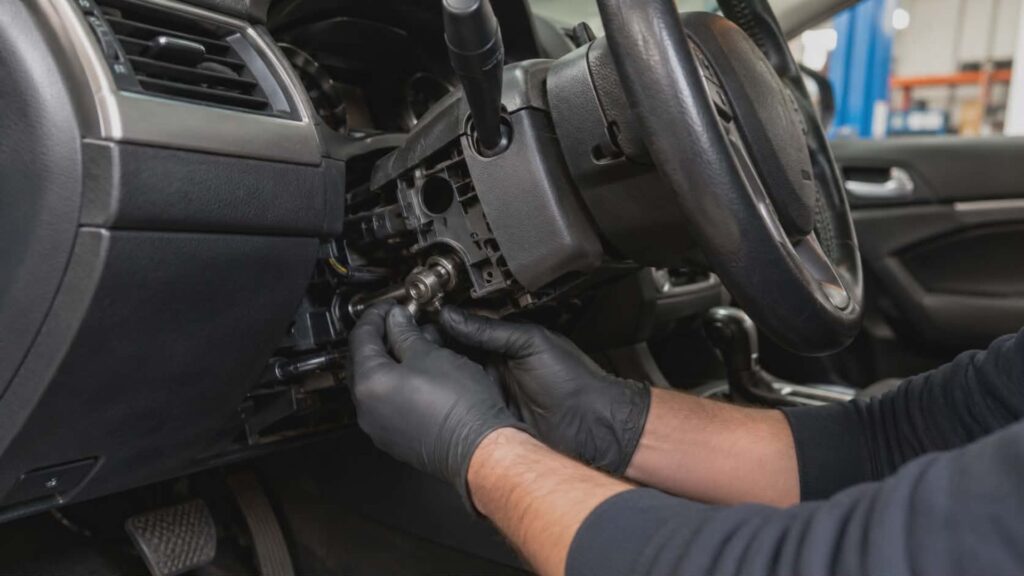
Why Your Steering Wheel Clicks When Turning and What to Do Next
That annoying clicking sound every time you turn the wheel is hard to ignore. It might start subtle – just a faint tick when you’re pulling out of a parking space – and before long it’s loud enough to make you wince at every intersection.
The good news? A clicking noise when turning usually points to something specific. And the sooner you figure out what’s causing it, the less likely you are to end up with a much bigger repair bill down the road.
This guide breaks down the most common reasons your steering wheel clicks when turning, what each sound might mean, and what steps to take next.
What Does It Mean When Your Steering Wheel Makes a Clicking Noise?
When something in your steering or suspension system starts making noise, your car is essentially giving you a warning signal. The steering wheel connects to a complex network of components – the steering column, joints, shafts, and suspension parts – and any one of them can become a source of noise when they wear out or lose lubrication.
Clicking or popping sounds when turning are different from grinding or squealing noises. A clicking sound is typically mechanical in nature, often caused by something that’s loose, worn, or dry. That said, the location and timing of the sound can tell you a lot about what’s actually going on.
The Most Common Causes of a Clicking Noise When Turning
Worn CV Joint or CV Axle
This is the most frequent culprit, especially when you hear a clicking or popping noise during slow, sharp turns. The CV joint – short for constant-velocity joint – is part of the front axle and helps transfer power from the transmission to the front wheels while allowing the suspension to move freely.
When the protective rubber boot around a CV joint tears, grease leaks out, and contaminants get in. Over time, the joint wears down and starts to make a clicking sound when you turn the wheel, particularly at low speed. If you notice the clicking noise coming from the front wheel area during tight turns, a worn CV joint is the likely explanation.
Left unaddressed, a failing CV axle can eventually break completely, leaving you stranded. It’s not something to put off.
Ball Joint and Control Arm Issues
The ball joint connects the control arm to the steering knuckle, acting like a pivot point for the front suspension. When ball joint wear becomes significant, it can produce a clunk or popping noise when turning and going over bumps.
A worn ball joint doesn’t just cause noise – it affects how the vehicle handles, and in severe cases, it can cause a front wheel to separate from the suspension system entirely. If you’re hearing a clicking or clunking sound that’s more pronounced on one side, the left front or right front ball joint may need attention.
Strut or Strut Mount Problems
A strut is a major suspension component that absorbs road impact and helps keep your tires in contact with the road. The strut mount sits at the top of the strut assembly and can wear over time, especially in areas with rough roads.
When the strut mount deteriorates, you’ll often hear a clunk or popping sound when turning your steering wheel, usually at low speed. The sound may feel like it’s coming from somewhere in the front end of the vehicle rather than directly from the steering wheel itself.
Steering Column Issues
Sometimes the clicking sound isn’t coming from the suspension at all – it comes from the steering column and may be heard behind the dashboard. Inside the column, there are column bearings, a steering shaft, and an intermediate shaft that all work together to translate your input into actual wheel movement.
When column bearings wear out, or the intermediate shaft develops dry spots or loose connections, you’ll hear noises when turning your steering wheel that seem to originate right behind the dashboard. These steering column issues can also cause some looseness or roughness in how the wheel feels.
Clock Spring Failure
The clock spring is a coiled ribbon of electrical connectors that sits inside the steering wheel column. It maintains continuous electrical contact between the steering wheel controls – things like the horn, cruise control, and airbag – and the rest of the vehicle’s wiring while you turn the steering wheel.
When the clock spring wears out or breaks, it can cause an airbag warning light, loss of horn function, or a clicking sound when turning. The clock spring is also responsible for features like a heated steering wheel or steering control buttons, so if those stop working alongside a clicking noise, that’s a telling sign.
Low or Dirty Power Steering Fluid
If you have hydraulic power steering, the power steering system relies on fluid pressure to make turning easy. Low or dirty power steering fluid can cause a whining noise or grinding noise when you turn, though some drivers describe it as a clicking or ticking sound as well.
Dirty power steering fluid or low fluid levels put extra strain on the steering pump and steering rack, and over time that can damage the power steering pump or rack or steering components. Checking the fluid is a simple first step – if it looks dark or smells burnt, it needs to be changed.
Debris in the Wheel Well
Occasionally, the sound coming from your vehicle when you turn isn’t mechanical at all. A small rock, twig, or piece of road debris can get lodged in the wheel well and rub against the tire or brake components – including disc brake shields – as you turn.
Before assuming the worst, it’s worth having someone take a look under the vehicle. Sometimes the simplest explanation is the right one.
How to Narrow Down the Source of the Noise
Not all clicking sounds when turning are the same. Here are a few observations that can help narrow things down before you visit a shop:
- Clicking only at low speed during tight turns – Points strongly to a CV joint or CV axle issue.
- Clunking or popping over bumps and during turns – Suggests suspension components like a strut, ball joint, or control arm.
- Clicking that seems to come from inside the cabin or behind the wheel – Likely a clock spring or steering column problem.
- Whining or grinding alongside clicking – May indicate a power steering issue or bearing wear.
- Clicking that started after hitting a pothole or curb – Suspension damage is likely.
Keep in mind that multiple issues can exist at the same time. A thorough inspection is the only way to know for certain what’s caused the noise.
Why You Shouldn’t Ignore Sounds When Turning
It can be tempting to turn up the radio and hope the noise goes away. It won’t. Steering or suspension problems tend to get worse over time, and what starts as an annoying clicking can turn into compromised steering performance, uneven tire wear, or a dangerous loss of vehicle control.
Whether you’re hearing a clicking, clunking, or whining noise when you turn, addressing it early is almost always cheaper and safer than waiting.
What to Do Next
If your steering wheel clicks when turning and you’re not sure why, the right move is to have it inspected by a qualified technician. A proper diagnosis using professional tools will identify what’s making the noise and what needs to be replaced.
At Don and Joe’s Auto Service in New Castle, IN, the ASE-certified team has been diagnosing steering and suspension issues since 1977. They handle everything from CV joint replacements and suspension repairs to steering column work and power steering service. You can reach them at 765-529-3555 or visit donandjoesautoservice.com to learn more about what they offer.
Frequently Asked Questions
Is it safe to drive when my steering wheel clicks?
It depends on the cause. A minor issue like a worn CV boot may allow short-term driving, but suspension components like a ball joint or strut can pose serious safety risks if they fail. Have it checked as soon as possible.
Why does my steering wheel only click at low speed?
Noise when turning the steering wheel at low speed – especially during tight turns – is a classic sign of a worn CV joint. The angle of the joint is most extreme during slow, sharp maneuvers, which is when the wear becomes audible.
Can a clicking noise when I turn be related to my brakes?
In some cases, yes. A loose brake pad or damaged disc brake shield can cause clicking or ticking sounds that become more noticeable during turns. A brake inspection can rule this out.
How much does it cost to fix a clicking noise when turning?
The cost varies widely depending on what’s causing the problem. A CV joint replacement is typically a moderate repair, while steering column issues or major suspension work can be more involved. Getting a free estimate from a trusted local shop is the best way to know what you’re looking at.
Conclusion
A clicking noise when you turn the steering wheel is your car’s way of asking for help. Whether it’s a worn CV joint, a failing ball joint, a tired strut, or something inside the steering column, the cause is usually identifiable – and fixable. Don’t let the sound become a serious safety issue. The team at Don and Joe’s Auto Service in New Castle, IN has the experience and tools to get to the bottom of it fast. Call 765-529-3555 to schedule your inspection today.