

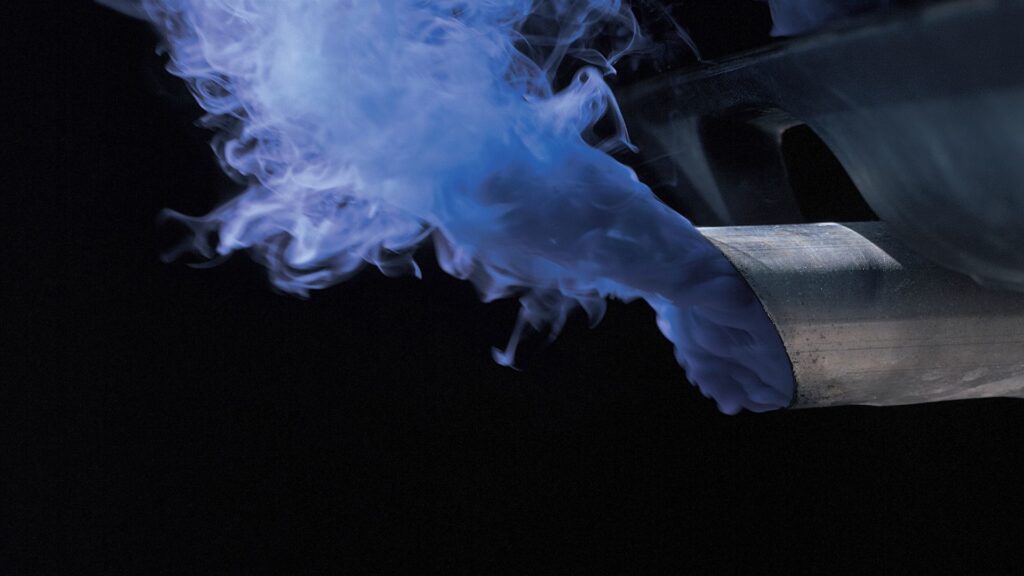
Blue Smoke From Your Exhaust Means Burning Oil, Period
If you’ve ever glanced in your rearview mirror and spotted a cloud of blue-gray smoke trailing behind your car, your stomach probably dropped a little. That reaction is warranted. Blue smoke from your exhaust is not a quirk, not a fluke, and not something that will fix itself. It means your engine is burning oil, and that’s a problem that deserves immediate attention.
Let’s break down exactly what’s happening under the hood and what you should do about it.
What Blue Exhaust Smoke Actually Tells You
Your internal combustion engine is designed to burn one thing: fuel. Whether you’re running gasoline or diesel, motor oil is never supposed to enter the combustion chamber. When it does, it burns alongside the fuel and exits through the exhaust system as that telltale blue smoke.
The color is the giveaway. White smoke usually points to coolant. Black smoke means excess fuel. Blue smoke? That’s oil, every single time.
How Oil Gets Into the Combustion Chamber
Understanding the source of the leak helps you understand the severity. There are several common pathways that allow motor oil to sneak into places it doesn’t belong.
Worn Piston Rings
The piston rings seal the gap between the piston and the cylinder wall. When these rings wear down, they lose their ability to contain combustion pressure properly. Oil from the crankcase gets pulled past the rings and into the combustion chamber, where it burns and exits as blue smoke. This is one of the most common causes of oil burning in high-mileage engines.
Leaking Valve Seals or Valve Guides
The valves in your engine, including intake and exhaust poppet valves, have seals and guides that keep oil from seeping into the intake manifold or directly into the cylinder. When a valve seal or valve guide wears out, oil drips down into areas it should never reach. You might notice blue smoke most prominently at startup, before the engine fully warms up, which is a strong sign that valve seals are the culprit.
A Blown Head Gasket
The head gasket sits between the engine block and the cylinder head, sealing the combustion chamber from coolant and oil passages. When this gasket fails, oil can enter the cylinder and burn. A blown head gasket is a serious repair, but catching it early prevents far worse engine damage.
Crankcase Ventilation System Failure
The crankcase ventilation system, often called the PCV system, is designed to manage pressure inside the crankcase and route blow-by gases back into the intake for combustion. When this system fails or gets clogged, pressure builds up inside the crankcase and forces oil into places it shouldn’t go, including the intake manifold and combustion chamber. The result is burning oil and blue exhaust smoke.
Turbocharger Seal Leaks
If your vehicle has a turbocharger, worn internal seals can allow oil to pass into the intake or exhaust stream. Because the turbocharger operates under intense heat and pressure, its seals take a beating over time. A leaking turbocharger often produces blue smoke, especially under hard acceleration.
Why You Should Never Ignore Blue Smoke
Oil is not just a lubricant – it’s the lifeblood of your engine. When your engine burns oil, you’re losing lubrication in critical areas like the crankshaft, cylinders, and valve train. Run too low on oil, and you’re looking at serious engine damage or complete engine failure.
Beyond that, burning oil damages your catalytic converter over time, increasing repair costs significantly. What starts as a simple seal replacement can snowball into a full engine repair if you keep putting it off.
How Technicians Diagnose the Problem
A proper diagnosis involves more than just looking at the smoke. Skilled technicians will perform a compression test to evaluate how well each cylinder is holding pressure. This helps identify worn piston rings versus valve issues. A leak-down test goes even further, pinpointing exactly where pressure is escaping inside the engine.
Computer diagnostics can also reveal related issues, like PCV system faults or sensor errors triggered by oil contamination. The goal is to find the exact source so the repair is done right the first time, not guessed at.
What Repairs Might Be Needed
The fix depends entirely on the source of the problem.
- Valve seals and valve guides can often be replaced without a full engine rebuild
- Worn piston rings typically require more significant engine disassembly
- A failing head gasket needs to be addressed promptly to prevent further damage
- Turbocharger seal issues may require rebuilding or replacing the turbo unit
- PCV system repairs are usually the least invasive and most affordable fix on this list
What to Do When Blue Smoke From Your Exhaust Appears
Blue smoke from your exhaust is your engine sending a clear distress signal. Burning oil never resolves on its own – it only gets worse. The longer it goes unchecked, the more damage accumulates and the more expensive the repair becomes.
If you’re seeing blue smoke in New Castle, IN, the team at Don and Joe’s Auto Service has the diagnostic tools and experience to find the exact cause and fix it properly. Call 765-529-3555 to schedule your engine inspection today.