
Low Oil Pressure Symptoms You Should Never Ignore
There are warning signs your car gives you that you can safely put off for a day or two. Low oil pressure is not one of them. When that oil pressure warning light flickers on your dashboard, or when your engine starts making noises it never made before, your vehicle is telling you something serious is happening right now.
Ignoring it is not just risky – it is expensive. Engine seizure is one of the most catastrophic and costly failures a car can experience, and low oil pressure is one of its leading causes.
What Oil Pressure Actually Does for Your Engine
To understand why this matters, you need to know what oil pressure actually does. Your engine has dozens of moving metal parts – pistons, crankshafts, camshafts, and bearings – all of them spinning and sliding against each other at high speed.
Motor oil creates a thin film between those surfaces, and the oil pump forces that oil through the entire engine under pressure. Without adequate pressure, lubrication breaks down, friction increases, metal grinds on metal, and parts begin to fail. It is that simple and that serious.
The oil filter also plays a role here. It removes contaminants and debris from the motor oil so the lubrication stays clean and effective. If the filter gets clogged or fails, it can cause a pressure drop that reduces proper oil flow to your engine.
Common Low Oil Pressure Symptoms You Should Never Ignore
The Oil Pressure Warning Light
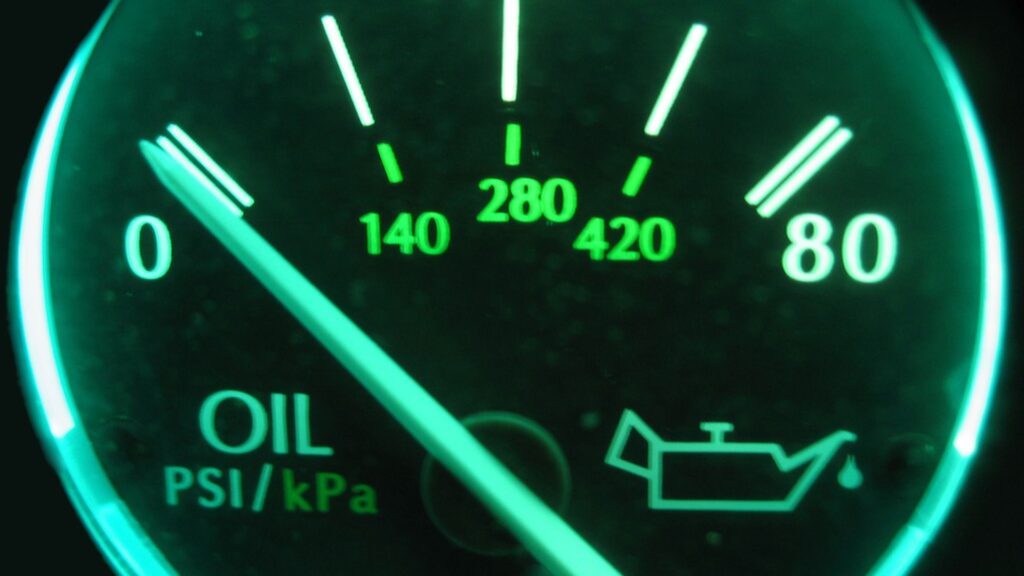
This is the most obvious signal, but many drivers see it and assume it will go away on its own. The light triggers when the sensor detects that pressure has dropped below a safe threshold. When you see it, take it seriously immediately.
Unusual Engine Noise
A knocking or ticking sound coming from under the hood is a classic sign that your bearings are not getting enough lubrication. That noise is metal components making contact they should not be making. The longer you let it go, the worse the wear becomes.
Engine Running Hot
Low oil pressure reduces the lubricating film between moving parts. That increases friction, and friction generates heat. If your temperature gauge is climbing along with other symptoms, your engine is under serious stress.
Oil Smoke or Burning Smell
If you notice smoke coming from the engine bay or a burning smell through your exhaust system, contamination or oil loss may already be affecting engine performance. These are not minor issues.
Visible Oil Leaks
A leak under your vehicle is a direct path toward low oil pressure. Motor oil escaping through worn seals or gaskets reduces the volume available for the pump to circulate, which causes a pressure drop throughout the system.
Why Low Oil Pressure Leads to Engine Seizure
When oil pressure drops significantly, the oil pump cannot maintain adequate flow through the engine. The bearings, which rely entirely on lubrication to function, begin to experience direct metal-to-metal contact. Heat builds rapidly, parts expand, and eventually the engine can seize – meaning internal components lock up and the engine stops working entirely.
An engine that has seized typically cannot be repaired. It needs to be rebuilt or replaced, which can run anywhere from a few thousand dollars to over ten thousand dollars depending on the vehicle. Compare that to the cost of an oil change or a pressure inspection, and the choice becomes obvious.
What Causes Low Oil Pressure in the First Place
Understanding the cause matters just as much as recognizing the symptoms. Several common culprits are worth knowing.
- Low oil level is the most straightforward. If you are not maintaining regular oil changes or your engine has a slow leak, the volume of motor oil available drops, and so does the pressure.
- A worn oil pump is another frequent cause. The pump is responsible for circulating oil throughout the engine, and if it is failing or damaged, pressure suffers immediately.
- Wrong oil viscosity can also be to blame. Using oil that is too thin or too thick for your engine’s specifications – especially in extreme temperatures – affects how well the oil flows and maintains pressure. This is one reason switching to a quality synthetic oil, matched to your vehicle’s requirements, can make a real difference.
- A stuck or worn relief valve within the pump can cause pressure to drop or fluctuate unexpectedly, even when oil levels appear normal.
- Oil contamination from coolant leaks, fuel dilution, or excessive dirt can also degrade viscosity and reduce the oil’s ability to maintain proper pressure and lubrication.
Do Not Self-Diagnose and Hope for the Best
Some drivers check the oil level, find it looks okay, and assume the warning light was a false alarm. The pressure sensor could be faulty, sure, but you should not assume that without a proper inspection. A bad sensor is still a problem that needs fixing. And if the sensor is working correctly, ignoring the reading puts your engine at serious risk.
The right move is to have a technician check the oil pressure with proper pressure measurement tools, inspect the oil pump, filter, and seals, and diagnose the exact cause before any real damage sets in.
Why Regular Maintenance Is Your Best Defense
Staying on top of preventive maintenance is the most reliable way to avoid low oil pressure issues before they start. Regular oil changes keep your motor oil fresh, clean, and at the right viscosity. Routine inspections catch leaks, worn seals, and filter issues early. Checking fluid levels and monitoring your dashboard warning indicators between services adds another layer of protection.
Skipping oil changes or stretching them too far is one of the fastest ways to accelerate engine wear. Think of it like skipping any routine care – eventually the neglect catches up, and the repair bill reflects it.
Get It Checked Before It Gets Worse
If you are experiencing any of the low oil pressure symptoms described here, the smart move is to stop driving and get a professional inspection right away. At Don and Joe’s Auto Service in New Castle, IN, the ASE-certified technicians have been diagnosing and repairing engine issues since 1977. They use state-of-the-art diagnostic technology to find the real cause, not just the surface symptom.
To learn more about how proper engine care can protect your vehicle long-term, explore our engine repair services and see how we approach repairs the right way.
Don’t Ignore Low Oil Pressure Symptoms
Low oil pressure is not a warning you can afford to put on the back burner. From a failing oil pump to a hidden leak, the causes are serious and the consequences – engine seizure – are even more so. Staying current on maintenance, paying attention to your dashboard, and acting quickly when something feels off are the habits that keep your engine running and your repair costs manageable. If something does not feel right, call Don and Joe’s at 765-529-3555 before a small problem becomes an engine replacement.