

Leak Down Vs Compression Test: Which One Exposes Worn Rings
If your engine has been burning oil, losing power, or just acting tired, someone has probably told you it needs a compression test or a leak down test. But what’s the difference? And more importantly, which one actually tells you if your piston rings are shot?
These two tests are related but not the same. Each one gives you different information, and knowing what that information means can save you from either overpaying for unnecessary work or missing a serious engine problem entirely.
Let’s break it down in plain language.
What Is a Compression Test?
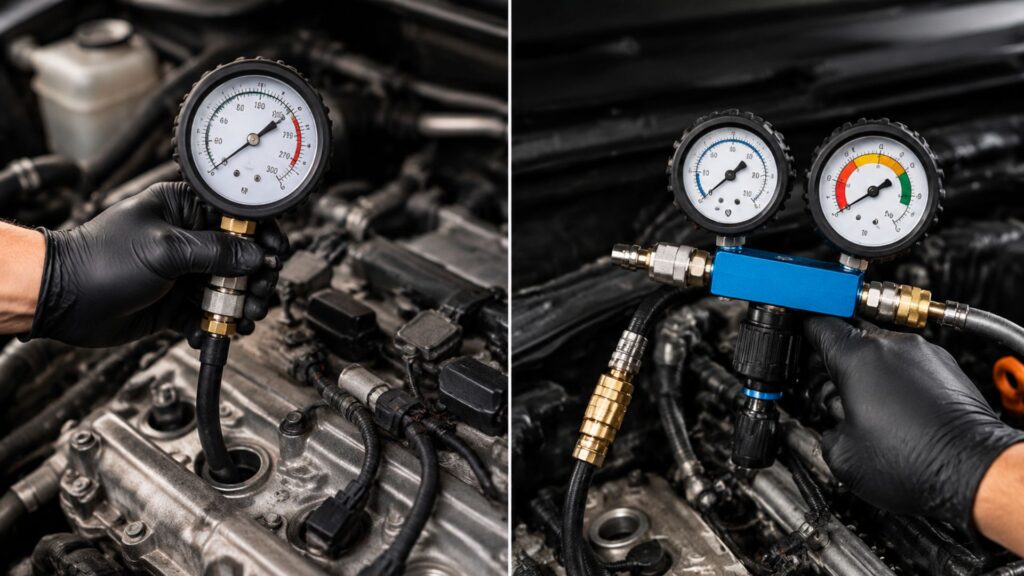
A compression test measures how much pressure builds up inside each cylinder when the piston moves upward on the compression stroke. You remove the spark plug, thread in a compression gauge, crank the engine, and watch the needle.
A healthy cylinder typically reads somewhere between 120 and 200 PSI, depending on the engine. The exact number matters less than consistency across all cylinders. If one cylinder reads significantly lower than the others, that’s your red flag.
What a Compression Test Can Tell You
A low compression reading tells you something is wrong, but it doesn’t tell you exactly what. The culprit could be worn piston rings, a bad valve, a blown head gasket, or even a damaged cylinder wall.
The test is quick and inexpensive, which is why most shops run it first as a screening tool. Think of it as the first question in a longer conversation with your engine.
The Wet Compression Test Trick
If a cylinder shows low compression, a good technician will add a small squirt of oil into the cylinder and retest. This is called a wet compression test. If the numbers jump up noticeably, the rings are likely worn because the oil temporarily seals the gap and restores compression.
If the numbers stay low after adding oil, the problem is more likely a valve or head gasket issue rather than the rings. It’s a simple but clever diagnostic step that helps narrow things down before diving deeper.
What Is a Leak Down Test?
A leak-down test takes things a step further. Instead of measuring how much pressure the engine builds on its own, this test introduces compressed air into the cylinder and measures how fast that pressure escapes.
The technician positions the piston at top dead center on the compression stroke, connects a leak-down tester to the spark plug hole, feeds in air at a set pressure, and reads the percentage of air leaking out. A healthy engine might show 5 to 10 percent leakage. Anything above 20 to 25 percent usually signals a real problem.
Why the Leak Down Test Is More Specific
Here’s where the leak-down test earns its reputation. Beyond just telling you there’s a leak, it tells you where the air is going. That’s the key advantage over a standard compression test.
A trained technician listens and watches for these clues:
- Air escaping into the intake points to a leaking intake valve.
- Air coming out of the exhaust suggests a leaking exhaust valve.
- Bubbles in the coolant reservoir indicate a blown head gasket.
- Air blowing out of the oil filler cap or dipstick tube is a strong sign of worn piston rings or cylinder wall damage.
That last one is the dead giveaway for ring wear. When compressed air blows past the rings and pressurizes the crankcase, you can actually hear it or feel it at the oil cap. No other test pinpoints ring condition that clearly.
Leak Down Vs Compression Test: The Real Difference
Think of it this way. A compression test asks: “Is this cylinder doing its job?” A leak down test asks: “If it’s not, where exactly is it failing?”
Both tests are valuable, but they answer different questions. Running a compression test first makes sense because it’s faster and cheaper. If everything looks normal, you may not need to go further. But if compression is low or inconsistent, the leak-down test is how you figure out exactly what’s leaking and why.
Which Test Is Better for Diagnosing Worn Rings?
If worn piston rings are the suspected issue, the leak-down test is the more definitive tool. The compression test can suggest rings are failing, especially with the wet test confirmation, but the leak-down test confirms it by showing exactly where the air is escaping.
That said, skipping straight to a leak-down test without running compression first isn’t always the most efficient approach. Most experienced technicians use both tests together as part of a complete engine evaluation.
Signs Your Engine Might Need These Tests
You don’t need to walk in knowing which test you need. You just need to pay attention to what your engine is telling you. Some common symptoms that call for cylinder pressure testing include:
- Blue or gray smoke coming from the exhaust, especially at startup
- Noticeable oil consumption between changes
- A rough idle or misfires on one or more cylinders
- Loss of power, particularly under load
- A check engine light with misfire codes (P0300 series)
- Fouled spark plugs that keep getting oil-coated
Any of these symptoms could point to ring wear, but they could also have other causes. That’s exactly why proper testing matters before anyone starts pulling an engine apart.
What Worn Piston Rings Actually Do to Your Engine
Piston rings serve three main jobs. They seal the combustion chamber so pressure doesn’t escape, they help transfer heat from the piston to the cylinder wall, and they scrape oil back down to keep it out of the combustion chamber.
When rings wear out or break, all three jobs suffer. Compression drops because combustion gases blow past the rings into the crankcase. Oil sneaks up past the rings and burns in the combustion chamber. Engine temperatures can become inconsistent, and overall performance takes a hit.
Left unchecked, worn rings don’t just hurt performance. They accelerate wear on other internal engine components. Cylinder walls can score. Bearings take on extra stress from pressure blow-by. What starts as ring wear can turn into a much bigger and more expensive engine repair job.
Can You Drive With Worn Rings?
Technically, yes, but it’s not a good idea to keep driving and ignoring the problem. An engine with badly worn rings will continue to deteriorate, and the oil burning and compression loss will get worse over time.
In some cases, a vehicle with moderately worn rings might still run well enough to drive for a while. But once you start burning significant amounts of oil or experiencing misfires, you’re risking more serious damage to catalytic converters, oxygen sensors, and the engine internals themselves.
Getting a proper diagnosis early is almost always cheaper than waiting until the damage compounds.
What Happens After the Tests?
If compression and leak-down testing confirm worn piston rings, the repair path depends on how bad the damage is and what else the inspection turns up.
Sometimes a ring replacement with a cylinder hone is sufficient if the cylinder walls are still within spec. Other times, the cylinders need to be bored and fitted with oversized pistons and rings. In severe cases where scoring or warping is extensive, an engine rebuild or replacement may be the most practical and cost-effective option.
The only way to know which direction makes sense is to have a qualified technician evaluate the actual condition of the engine after testing. Skipping that step and guessing at repairs is how people end up spending money twice.
Why Professional Diagnosis Matters
These tests sound simple enough, but getting accurate, useful results requires proper technique and the right equipment. The piston has to be positioned correctly for a leak-down test to mean anything. Compression test results need to be interpreted in context, not just compared to a single spec number.
At Don and Joe’s Auto Service, the ASE-certified technicians in New Castle, IN have been performing engine diagnostics since 1977. That kind of experience means they know how to read the results and explain what they actually mean for your vehicle, not just hand you a printout full of numbers.
Whether the issue turns out to be piston rings, valves, a head gasket, or something else entirely, having the right diagnosis from the start is what leads to the right repair.
FAQs About Leak Down and Compression Testing
How long does each test take?
A compression test on a four-cylinder engine typically takes 15 to 30 minutes. A leak down test takes a bit longer because each cylinder needs to be rotated to top dead center individually, so expect 30 to 60 minutes or more depending on the engine.
Can I do these tests at home?
Compression testers are inexpensive and available at auto parts stores, so a basic test is possible for a DIYer. Leak-down testers are also available but require a shop air compressor and more technical knowledge to interpret correctly. For accurate diagnosis, professional testing is almost always worth it.
What does it cost to test for worn rings?
Costs vary depending on the shop and the complexity of the engine. Many shops include compression testing as part of an overall engine diagnostic service. Don and Joe’s Auto Service offers free estimates when performing the work, so you’ll know what you’re looking at before committing to repairs.
Will an oil change help with worn rings?
Switching to a higher viscosity oil or using an oil change treatment might temporarily reduce smoking or consumption, but it won’t fix worn rings. It can mask symptoms for a time, but the underlying wear continues.
How do I know if it’s rings or valves?
That’s exactly what the combination of compression and leak-down testing is designed to figure out. The wet compression test and leak-down results both help differentiate between ring and valve problems. A professional diagnosis is the most reliable way to know for sure.
Which Test Should You Use for Worn Piston Rings?
When it comes to diagnosing worn piston rings, the leak-down test is the more precise tool, but the compression test is a smart starting point. Used together, they give a complete picture of what’s happening inside your engine. If you’re seeing blue smoke, burning oil, or losing power in New Castle, IN, don’t guess. Get your engine properly tested before the problem gets worse.
Schedule your engine diagnostic with Don and Joe’s Auto Service by calling 765-529-3555, or learn more about what’s involved with engine repair.