

5 Bad Driveshaft Symptoms: Early Warning Signs
You’re driving down the road, and suddenly there it is – a clunking, vibrating, or grinding sensation coming from somewhere underneath your car. It’s easy to brush it off as a pothole you hit last week, but if it keeps happening, your driveshaft might be sending you a warning you shouldn’t ignore.
The driveshaft is one of those parts that most drivers don’t think about until something goes wrong. But when it does go wrong, the symptoms are hard to miss – and the consequences of ignoring them can be serious.
What Does a Driveshaft Actually Do?
Before diving into bad driveshaft symptoms, it helps to understand what this component actually does. The driveshaft is a rotating metal tube that transfers power from your transmission to the wheels. Without it, the engine’s power has no way of reaching the axles that move your car forward.
In rear-wheel drive and four-wheel drive vehicles, the driveshaft runs lengthwise under the vehicle. Front-wheel drive cars use axle shafts that serve a similar function. Either way, when something goes wrong with this system, you’re going to feel it.
The Most Common Bad Driveshaft Symptoms
Not every driveshaft problem feels the same. The symptoms can vary depending on how far the damage has progressed and what specific component has failed. Here are the most telling signs.
Clunking or Banging Noises When You Accelerate
This is often the first thing drivers notice. A clunking or banging sound when you press the gas pedal – especially from a stop – is a classic bad driveshaft symptom. It usually points to worn or damaged universal joints, which are the small cross-shaped connectors that allow the driveshaft to flex as the suspension moves.
When those U-joints wear out, they develop play in the joint, and that slop causes a knock or bang each time you put the drivetrain under load.
Vibrations While Driving
If you feel a vibration coming up through the floorboard or the seat, especially at highway speeds, the driveshaft could be out of balance or damaged. A bent driveshaft, a missing balance weight, or worn center support bearings can all cause this kind of shaking.
This vibration tends to get worse as your speed increases. Some drivers mistake it for a tire balance issue, but if new tires and a fresh balance don’t fix it, the driveshaft is worth investigating.
Turning Feels Stiff or Catches
If your vehicle hesitates, clicks, or feels tight when you turn – particularly in four-wheel drive vehicles – the CV joints (constant velocity joints) might be the culprit. On many front-wheel-drive and all-wheel-drive vehicles, worn CV joints can cause symptoms similar to those of a bad U-joint.
A clicking sound during tight turns is one of the most recognizable bad driveshaft symptoms related to worn CV joints. The sound often increases as the joint wears further.
Squeaking That Changes With Speed
A rhythmic squeak that speeds up as you accelerate could indicate a driveshaft that needs lubrication or has a worn U-joint starting to seize. This is especially common in vehicles that haven’t had their driveshaft components serviced in a long time.
Unlike brake squeaks, this sound tends to come from the middle or rear of the vehicle and happens regardless of whether you’re braking.
Shuddering During Acceleration
A shudder or shaking sensation that happens specifically when you accelerate from a low speed – not a steady vibration, but a pulsing or buckling feel – often points to a failing CV joint or a driveshaft that’s come out of phase.
This can feel almost like the car is struggling to find its footing when you first give it gas, then smooths out once you’re at a consistent speed.
Why U-Joints and CV Joints Fail
The universal joints and CV joints in your driveshaft system are built to handle a lot of stress, but they do wear out over time. Most of these joints are packed with grease and sealed. Once that seal cracks or dries out, dirt and moisture get in, the grease escapes, and metal-on-metal wear begins.
On older vehicles, U-joints often have grease fittings that allow a technician to re-lubricate them during routine maintenance. Many modern vehicles use sealed joints that aren’t serviceable – they simply need to be replaced when they wear out.
Driving on rough roads or off-road terrain can accelerate this wear. Lifting a vehicle without adjusting the driveshaft angle can also put extra stress on U-joints, shortening their lifespan considerably.
Is It Safe to Drive With a Bad Driveshaft?
This is where things get serious. Driving with a failing driveshaft isn’t just uncomfortable – it can be genuinely dangerous. A severely worn U-joint can seize or break completely while the vehicle is moving. If that happens, the driveshaft can drop out of the vehicle or, worse, dig into the pavement and launch the rear of the car upward.
Even before it reaches that point, a vibrating or unbalanced driveshaft puts stress on surrounding components, including the transmission, differential, and wheel bearings. What starts as a relatively simple repair can become a much more expensive fix if left alone.
If you’re noticing any of the symptoms described above, it’s worth getting the vehicle looked at sooner rather than later.
How a Driveshaft Is Inspected and Repaired
When a technician inspects a driveshaft, they’re typically looking for worn or seized U-joints, damaged or torn CV joint boots, a bent or out-of-balance driveshaft, and worn center support bearings on longer driveshafts.
The fix depends on what they find. Sometimes a U-joint replacement is all that’s needed, which is a relatively straightforward repair. Other times, the entire driveshaft needs to be replaced or rebuilt and balanced. CV joint replacement is also common on front-wheel drive and all-wheel drive vehicles and usually involves replacing the entire axle shaft assembly.
Don’t Confuse Driveshaft Problems With Other Issues
Some bad driveshaft symptoms overlap with other mechanical problems, which is why a proper diagnosis matters. Vibrations can come from tires, wheel bearings, or brake rotors. Clunking can come from worn sway bar links or ball joints. A clicking sound during turns can occasionally be a brake pad issue.
This is why bringing your vehicle to experienced technicians – ones who know what to look and listen for – makes a real difference. A thorough inspection eliminates guesswork and points to the actual source of the problem.
What Drivers in New Castle, IN Should Know
If you’re driving around New Castle, IN and noticing any of these symptoms, you don’t have to wonder whether it’s serious. Getting it checked out quickly gives you clarity and helps you avoid a bigger repair bill down the road.
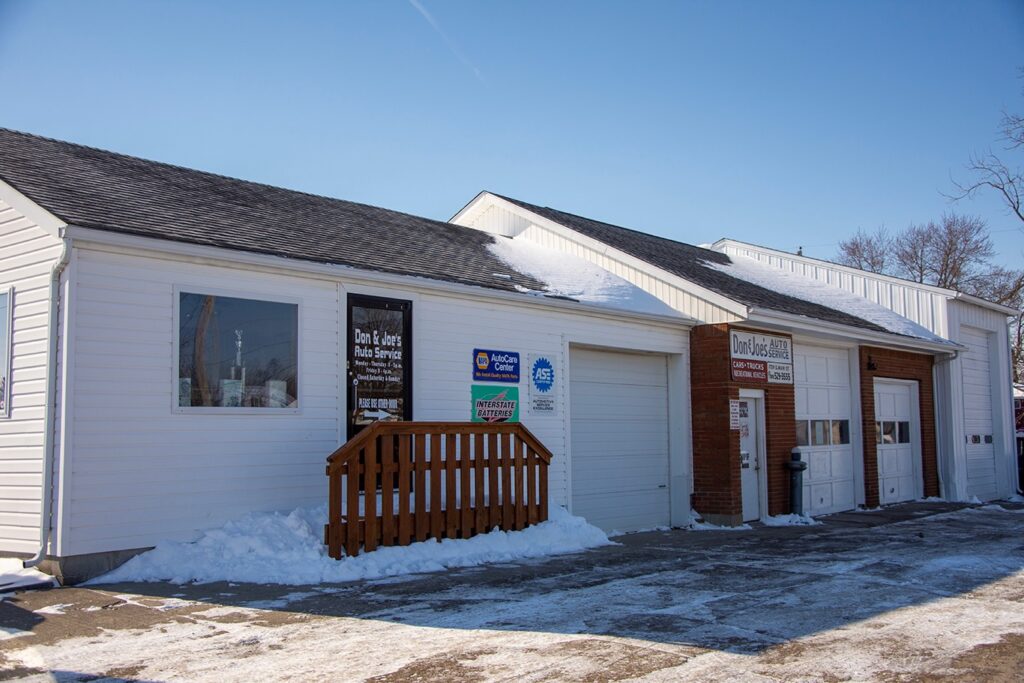
Don and Joe’s Auto Service has been handling driveline repair for drivers in New Castle and the surrounding Henry County area since 1977. The ASE-certified technicians there know how to track down the source of drivetrain noise and vibration and give you a straight answer about what it will take to fix it.
They offer free estimates when performing the work, and most parts and labor come with a one-year warranty. That kind of accountability matters when you’re trusting someone with your vehicle.
If you want to know more about what’s involved in this type of repair, take a look at the driveline repair services offered at Don and Joe’s. It’s a good starting point for understanding what the repair process looks like and what to expect.
Frequently Asked Questions About Bad Driveshaft Symptoms
How do I know if my driveshaft is bad or if it’s something else?
The most reliable way to tell is to have it inspected by a qualified technician. That said, driveshaft problems tend to produce symptoms that change with speed or load – vibrations that get worse at highway speeds, clunks that happen only when accelerating, or clicks that occur only during turns. If the noise or vibration is tied to one of those specific conditions, the driveshaft or its joints are a likely suspect.
Can I replace just the U-joint instead of the whole driveshaft?
In many cases, yes. If the driveshaft tube itself is straight and undamaged, replacing just the U-joint or CV joint is often the right repair. A technician can assess whether the rest of the shaft is serviceable or if a full replacement makes more sense.
How long do driveshafts last?
A well-maintained driveshaft can last the life of the vehicle. The joints, however, wear out long before the shaft itself does. U-joints and CV joints often need attention somewhere between 70,000 and 150,000 miles, though rough driving conditions or lack of maintenance can shorten that range.
What happens if I ignore driveshaft symptoms?
At best, the repair gets more expensive as surrounding components absorb damage from a vibrating or failing shaft. At worst, a broken driveshaft becomes a serious safety hazard while driving. Neither outcome is worth the risk.
What to Do When You Notice Bad Driveshaft Symptoms
A clunking noise or vibration under your car isn’t something to put off. This is your vehicle telling you that something in the driveline needs attention. The longer you wait, the more likely a straightforward repair turns into a bigger, costlier one. If you’re in New Castle, IN and noticing any of these bad driveshaft symptoms, reach out to Don and Joe’s Auto Service at 765-529-3555 or explore their driveline repair services to schedule an inspection and get a free estimate.