
7 Bad Oxygen Sensor Symptoms You Shouldn't Ignore
Your car is shaking at a red light. You tell yourself it’s nothing. Maybe it’s the road. Maybe it’s just cold outside. But that rough idle is not something to brush off, especially when a bad oxygen sensor is behind it.
Here’s what’s actually going on under the hood, and why it matters more than you might think.
What Does an Oxygen Sensor Actually Do?
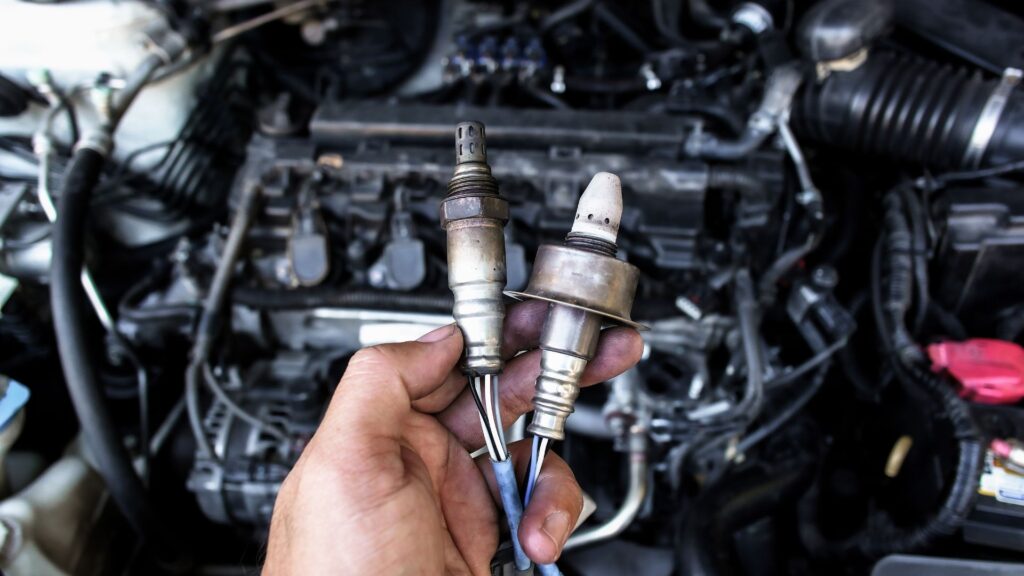
The oxygen sensor monitors the level of oxygen in your exhaust gas after combustion. It sends voltage signals to your powertrain control module (also called the engine control unit or ECU), which then adjusts the air-fuel ratio inside each cylinder to keep combustion running efficiently.
When the sensor is working correctly, your engine gets the right mixture of air and fuel at the right time. When it fails, that balance falls apart fast.
Why a Bad Oxygen Sensor Causes a Rough Idle
A failing oxygen sensor sends inaccurate readings to the engine control unit. The ECU thinks the air-fuel mixture is off, so it overcorrects, which causes uneven combustion inside the combustion chamber.
That uneven combustion creates the vibration and shaking you feel at idle. It can also lead to engine knocking, a rhythmic pinging sound that signals the fuel is igniting at the wrong moment in the cylinder. Left unchecked, that kind of stress wears on your spark plugs, ignition system, and more.
Other Bad Oxygen Sensor Symptoms You Might Notice
A rough idle rarely shows up alone. If your oxygen sensor is going bad, you may also notice:
- Check engine light – This is often the first sign. The ECU detects incorrect voltage signals from the sensor and triggers the warning.
- Poor fuel economy – A rich or lean fuel mixture burns through gas inefficiently, hitting your wallet every time you fill up.
- Failed emissions inspection – A compromised exhaust system and failing catalytic converter often follow a neglected oxygen sensor, which can cause emissions test failures.
- Sluggish acceleration – When the fuel injection system is working off bad sensor data, your engine response suffers.
Vehicles across every make and model are vulnerable. Whether you drive a Honda, a Lexus ES, or an older pickup, the oxygen sensor is a critical part of how your internal combustion engine stays healthy.
How Long Can You Ignore It?
Not long, honestly. The longer a bad oxygen sensor goes unaddressed, the more damage it can do downstream. The catalytic converter relies on the exhaust gas data that the oxygen sensor provides. A faulty sensor pumps unburned fuel into the catalytic converter, which can destroy it over time. Replacing a catalytic converter costs significantly more than replacing a sensor.
There is also the issue of your electric battery and fuel system working harder than they should to compensate for misfires and erratic combustion cycles. The wear adds up quickly.
What a Diagnostic Check Reveals
A proper computer diagnostic reads the voltage data coming from your oxygen sensor and identifies whether it is operating within normal range. At Don and Joe’s Auto Service in New Castle, IN, ASE-certified mechanics use state-of-the-art diagnostic technology to pinpoint exactly which sensor is failing, whether it’s a pre-catalytic converter sensor or a downstream sensor near the exhaust system.
That precision matters. Replacing the wrong part wastes time and money.
What the Repair Involves
Replacing an oxygen sensor is typically a straightforward repair. A mechanic removes the old sensor from the exhaust system, checks the surrounding gasket and exhaust components for wear, and installs a new sensor calibrated to your vehicle’s specifications. From there, the ECU relearns the correct air-fuel mixture, and that rough idle usually disappears.
Most repairs come with a 1-year warranty on parts and labor at Don and Joe’s, so you are not left wondering if the fix will hold.
What to Do About a Bad Oxygen Sensor
A rough idle is your car trying to tell you something. When a bad oxygen sensor is behind it, the problem touches your fuel efficiency, your emissions, your catalytic converter, and your wallet. Ignoring it only makes the repair bigger. If you are noticing any of these symptoms, schedule a computer diagnostic with the team at Don and Joe’s Auto Service by calling 765-529-3555. Getting the right answer fast is always the smarter move.