
What Is a Diagnostic Test on a Car? Here's What It Checks
If your check engine light just came on and you have no idea why, you are not alone. That little glowing icon on your dashboard sends millions of drivers into a mild panic every year. A diagnostic test is the first step toward getting a real answer, and understanding what it actually does can save you time, money, and a lot of guesswork.
Think of It Like a Physical Examination for Your Car
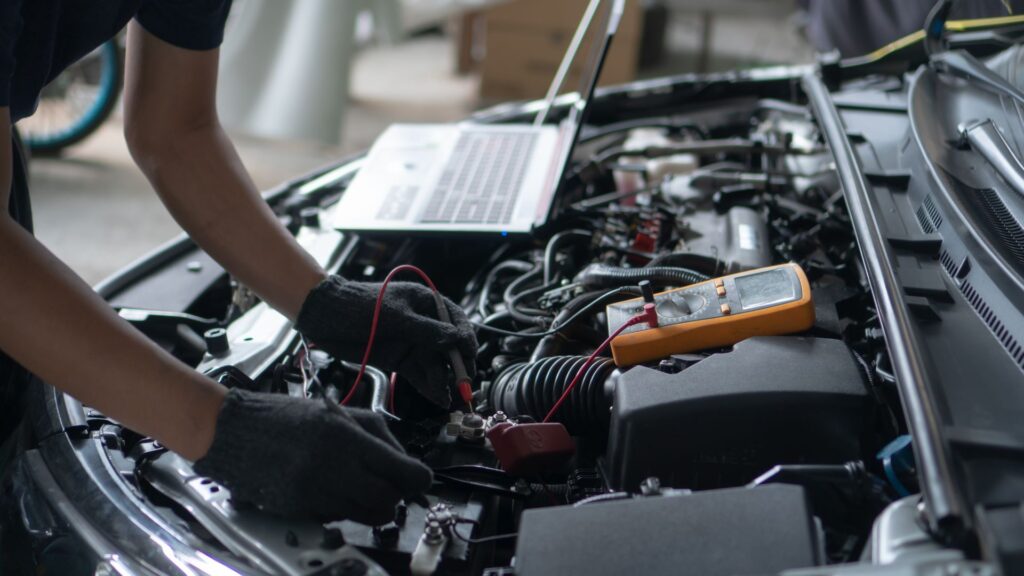
A diagnostic test on a car works a lot like a physical examination at a doctor’s office. Instead of a physician checking your reflexes and blood pressure, a technician connects a scan tool to your vehicle’s computer system to read what is going on underneath the hood.
Modern vehicles are equipped with on-board diagnostics, often referred to as OBD-II, a standardized system built into cars, trucks, and SUVs that continuously monitors performance data across dozens of systems. When something falls outside of the normal range, the computer logs a fault code and often triggers a warning light on your dashboard.
The scan tool acts almost like an image scanner for your car’s internal systems. It pulls those stored fault codes and gives the mechanic a starting point for diagnosis, much like how a medical device gives a doctor data before making a medical diagnosis.
What Does a Diagnostic Test Actually Check?
This is where a lot of drivers get surprised. A car diagnostic test does not just look at one thing.
It checks multiple systems at once, giving the auto mechanic a full picture of how your vehicle is performing.
Engine Performance
The engine is typically the first area examined. The scan tool checks for misfires, fuel delivery problems, and issues with the ignition system. Sensors throughout the engine report back to the computer, and any irregular readings get flagged for further inspection.
Transmission
Transmission problems can be subtle at first, but the diagnostic software catches abnormal shifting patterns, slipping, and pressure irregularities before they turn into expensive repairs.
Catching a transmission issue early through a diagnostic test is one of the most practical ways to avoid a much larger bill later.
Brakes and Safety Systems
Brake sensors, anti-lock brake system performance, and even airbag systems all fall within the scope of a full diagnostic. The airbag system in particular is rarely top of mind until it needs to work, so having it checked during routine maintenance is smart practice.
Heating, Ventilation, and Air Conditioning (HVAC)
Your heating and cooling system has its own set of sensors and controls. A diagnostic test can reveal whether your HVAC system is underperforming due to a faulty sensor, a refrigerant issue, or a problem with the blower components.
Exhaust System
Oxygen sensors, catalytic converter efficiency, and exhaust system readings all get reviewed. A failing oxygen sensor is one of the most common reasons the check engine light turns on, and it directly affects fuel economy and emissions output.
How Is a Car Diagnostic Test Different From a Visual Inspection?
A visual inspection is exactly what it sounds like – a mechanic looks at what can be seen with the naked eye. A diagnostic test goes several layers deeper. It accesses live data streams from sensors that are buried inside components you would never see during a standard walk-around.
Think of a visual inspection as looking at someone and guessing how they feel, while a diagnostic test is more like running bloodwork. Both have value, but the data from a diagnostic gives a technician far more accurate information to work with.
Does Every Shop Do the Same Diagnostic?
Not exactly. Large chain operations like Jiffy Lube or Meineke Car Care Centers may offer basic code reading as part of a service package, but reading a fault code is only the beginning.
Interpreting what that code means and tracing it back to the actual root cause requires experienced technicians and proper diagnostic software.
A fault code tells you that something is wrong, similar to how a medical test flags an abnormality. It does not automatically tell you why. That is where the skill of a qualified auto mechanic becomes essential.
Some vehicles, like a Volvo, require brand-specific software and more advanced tools for accurate readings. A general code reader simply will not give you the full picture on every car.
When Should You Get a Diagnostic Test?
You do not have to wait for a warning light to get a diagnostic test. Many drivers include it as part of their routine maintenance schedule, especially before buying a used vehicle or heading into a new season. If your vehicle is hesitating, stalling, running rough, getting worse fuel mileage, or showing any unusual behavior, a diagnostic test is the right first move.
What to Do Next If Your Car Needs a Diagnostic Test
A car diagnostic test is one of the smartest investments you can make in your vehicle’s long-term health. It takes the guesswork out of repairs and gives both you and your technician clear, reliable data to work from. If your check engine light is on or something just does not feel right with your vehicle, do not wait. Contact Don and Joe’s Auto Service in New Castle, IN at 765-529-3555 to schedule your computer diagnostic and get accurate answers fast.