
Car Overheating In Idle? Fix The Real Causes Before They Wreck Your Engine
You are sitting at a stoplight or in a drive-through, and suddenly you notice the temp gauge starting to rise. The car is fine on the highway, but the moment it starts to idle, the needle creeps toward hot. If your car overheat problem only shows up at a standstill, that is not something to ignore.
Overheating at idle is often a warning sign that something inside your engine cooling system is not working the way it should. If left alone, engine overheating can turn into warped parts, a blown head gasket, or even complete engine failure.
Let’s break down what is really happening and how to fix it before serious damage sets in.
Why Does a Car Overheat While Idling?
When you are driving at normal speed, airflow moves naturally through the radiator. That airflow helps cool the hot coolant as it circulates through the engine.
But when you idle, the vehicle is not moving. There is very little natural airflow. At that point, your cooling system relies heavily on the radiator fan, proper coolant flow, and system pressure to keep temperatures under control.
If something in that chain fails, your car can overheat while idling.
Common Causes of Overheating at Idle
There are a few common causes we see repeatedly at Don & Joe’s Auto Service in Henry County, IN.
Cooling Fan Problems
The cooling fan or radiator fan is critical when your car is not moving. This fan (a mechanical or electric fan machine) pulls air through the radiator to cool the fluid inside.
If the cooling fan is not running, you may overheat while idling, but be fine at higher speeds.
Possible reasons include:
- A blown fuse
- A bad relay
- A faulty fan motor
- A problem with the temp sensor or ECU
Your vehicle relies on a sensor to tell the fan when the engine temperature rises. If that sensor or relay fails, the fan will not kick on.
Low Coolant or Coolant Leaks
Low coolant is one of the most overlooked reasons a car overheating issue starts. If there is not enough coolant in the radiator or coolant reservoir, heat cannot transfer properly.
Coolant leaks can come from:
- A worn hose or radiator hose
- Cracked coolant hoses
- A damaged radiator
- A failing water pump
- A small leak at a gasket
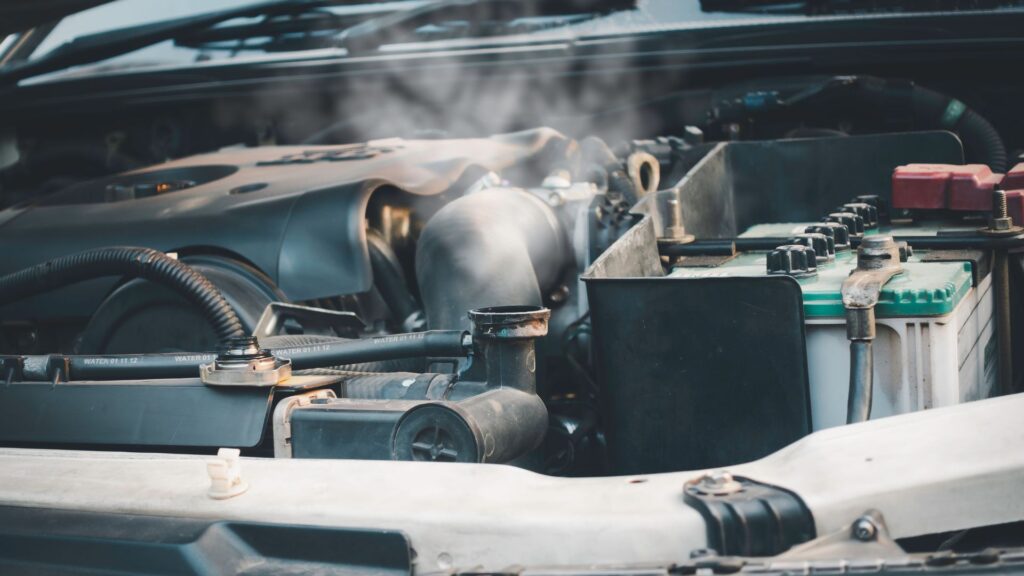
Even a small drip can lower the coolant level over time. You might notice steam, white smoke from the pipe, or the sweet smell of antifreeze. That is a clear indication that something is wrong.
Thermostat Stuck Closed
The thermostat controls when coolant can circulate through the engine. If it sticks shut, the hot coolant cannot move into the radiator to cool down. When coolant cannot circulate, it can quickly boil inside the engine. This often causes a sudden overheating situation, even if everything else seems fine.
Radiator Issues or Clogs
The radiator (engine cooling component) must allow coolant flow freely. Over time, internal corrosion can corrode metal passages. Dirt and debris can also clog the cooling fins. A clog reduces airflow and limits heat transfer. If your radiator cap is not holding proper psi, system pressure drops, and coolant can boil at a lower temperature.
A damaged radiator or a weak radiator cap can easily lead to engine overheating.
Water Pump Failure
The pump is what pushes coolant through the engine and radiator. If the water pump is worn or its fan belt is loose or broken, coolant flow slows down.
Without steady movement of water and coolant, the Engine builds heat fast, especially during idle or extended period stops.
What To Do If Your Car Starts To Overheat at Idle
If you notice the temp gauge rising:
- Turn off the AC and turn on the heater to pull heat away from the engine.
- Let the car idle briefly while watching the gauge.
- If the temperature continues to rise, shut it off and let the car cool down.
Never open a radiator cap while hot coolant is under pressure. It can cause serious burns.
Check the coolant reservoir once things cool down. If the coolant level is low, adding coolant may help temporarily, but that does not fix the underlying problem. If you see repeated low coolant, steam, or white smoke, take it to a mechanic as soon as possible.
Could It Be a Head Gasket?
A blown head gasket is more serious, but it can start with overheating at idle. Signs include:
- White smoke from the pipe
- Coolant mixing with oil
- Constant loss of enough coolant
- Bubbling in the radiator
The head gasket seals the engine block and cylinder head. When it fails, heat and pressure escape. If not addressed quickly, you may end up with a blown head situation that requires full professional engine repair services.
If you suspect internal damage, get it fixed immediately.
Why Proper Diagnostics Matter
Modern vehicles from Chrysler, Dodge, Jeep, and Ram Trucks rely on multiple sensors and the ECU to manage temperature and cooling fan operation. A failed temp sensor or electrical fault will not always be obvious.
That is where advanced computer diagnostics testing becomes critical. It allows experienced mechanics to see exactly what the cooling system and sensor network are doing in real time.
At Don & Joe’s Auto Service in Henry County, IN, we use state-of-the-art equipment to pinpoint the issue instead of guessing.
Prevent Overheating Before It Starts
The best way to avoid overheating at idle is regular inspection of your cooling system.
During routine preventative maintenance services, technicians check:
- Coolant condition and antifreeze strength
- Radiator hose and coolant hoses’ integrity
- Radiator cap pressure
- Fan belt condition
- Water pump operation
- Proper bleed procedures to remove air pockets
Air pockets trapped in the coolant system can disrupt coolant flow and create hot spots. A proper bleed ensures smooth circulation and stable engine temperature.
If your system has developed a leak or clogged passages, professional auto heating and cooling system repair can restore the correct airflow and system pressure.
For larger issues, complete auto repair services or professional engine repair services may be required to prevent permanent engine damage.
Do Not Ignore the Warning Signs
If your car overheat problem only shows up at idle, that is still serious. Today’s internal combustion engine cooling systems are designed to handle stop-and-go traffic. When they cannot, something is wrong.
Whether it is a faulty fan motor, a clogged radiator, a weak water pump, or coolant leaks, the sooner you address it, the better.
Conclusion
If your car starts to overheat while idling in Henry County, IN, do not brush it off as a small glitch.
Small cooling system problems can quickly turn into major engine damage. Let the car cool, check the coolant level safely, and pay attention to warning signs like steam or white smoke. If the issue continues, have a trusted mechanic inspect it properly. Call Don & Joe’s Auto Service at 765-529-3555 or visit their blog and website to schedule service. Fix it early and protect your engine for the long run.