
That Grinding Noise When Braking Means Worn-Out Pads
You press the brake pedal and hear it – that awful grinding sound that makes your stomach drop a little. It is not something you can ignore, and honestly, you should not try to. That noise is your car telling you something important, and the message is usually the same: your brake pads are worn out.
What Is That Grinding Noise When Braking?
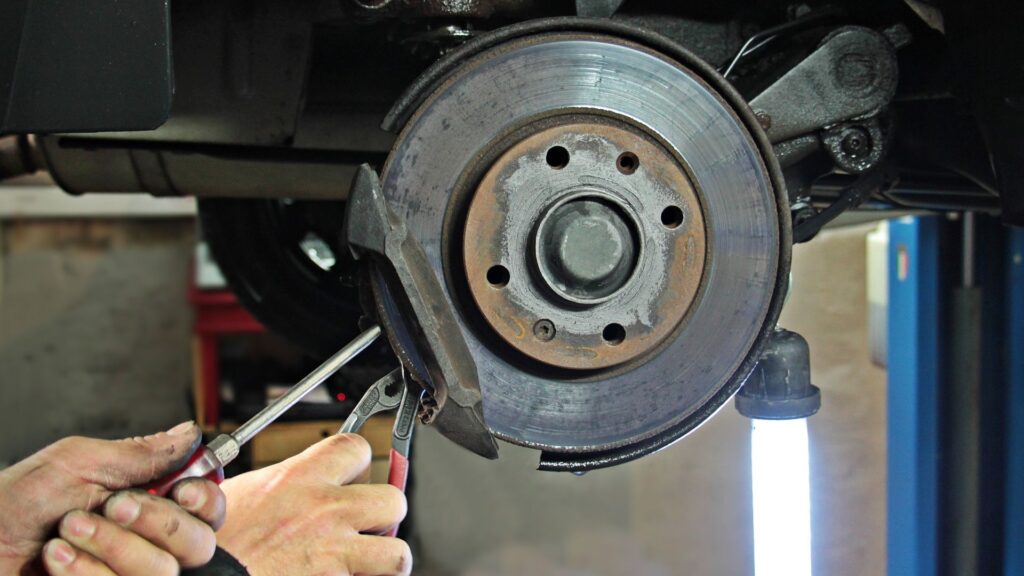
Brake pads are designed with a layer of friction material that presses against a metal disc (called a rotor) to slow your vehicle down. When that material wears away completely, the metal backing of the pad makes direct contact with the rotor. The result is that grinding sound you are hearing – metal on metal, spinning at speed.
This is not just a noise issue. It is a safety issue. Every second you delay puts your stopping power at risk.
Why Brake Pads Wear Out
Brake pads wear out through normal use. Every time you slow down, heat and friction eat away at the pad material little by little. Heavier vehicles like trucks put more demand on brakes, which accelerates wear. Driving habits matter too – frequent hard stops wear pads faster than smooth, gradual braking.
Some pads also come with a small metal wear indicator built in. That high-pitched squealing sound before the grinding starts? That is the indicator doing its job, giving you an early warning before things get worse.
Grinding vs. Squealing: What’s the Difference?
Not all brake noises mean the same thing, and knowing the difference can help you gauge how urgent the problem is.
- Squealing is usually the wear indicator doing exactly what it is built for. It is a built-in early warning that your pads are getting low, and it is your cue to schedule service soon.
- Grinding means that warning window has passed. The friction material is gone, and metal is now making contact with metal every time you brake.
- Squeaking that comes and goes, especially in humid or rainy weather, can just be surface moisture and is usually nothing to worry about.
- A grinding sound that gets louder or happens on every stop is a sign to get off the road-testing and into the shop.
If you caught the squeal early, you likely have a simple pad replacement ahead. If you are already hearing grinding, the rotors may be part of the conversation too.
Other Causes Behind Brake Grinding
Not every grinding sound means worn pads. A few other culprits worth knowing about include:
- Debris caught in the brake assembly – A small rock or piece of debris can lodge between the pad and rotor, causing a grinding or scraping sound even on newer brakes.
- Rust on the rotor – If your car sits for a while, surface rust can build up on the disc brake rotor. This usually clears up after a few stops, but persistent rust may require inspection.
- Worn wheel bearings – A failing bearing can produce a grinding sound that changes with vehicle speed, sometimes mistaken for a brake issue.
- Lack of lubrication on brake hardware – Certain components require lubricant to function quietly. Without it, metal contact creates unwanted noise.
What Happens If You Keep Driving on Worn Pads
Ignoring the grinding is where things get expensive and dangerous. Worn pads damage the rotor over time, turning what would have been a simple pad replacement into a full brake job with rotor resurfacing or replacement.
Beyond cost, your vehicle loses braking efficiency, your fuel economy in automobiles can drop slightly due to drag, and your overall control of the car is compromised.
A grinding brake on a Toyota, a BMW 7 Series, or a domestic truck all carry the same risk – reduced stopping ability when you need it most.
What to Do About Grinding Noise When Braking
If you hear grinding when braking, do not wait. At Don and Joe’s Auto Service, ASE-certified technicians have been diagnosing and repairing brake systems since 1977. Using up-to-date diagnostic tools, they can identify whether the issue is worn pads, a damaged rotor, a piston problem, or something else entirely.
They offer free estimates when performing the work, and most parts and labor come backed by a 1-year warranty.
Brake Repair Cost: What to Expect
The cost of fixing a grinding brake depends on how far the damage has gone by the time you bring it in.
- Pad replacement alone typically runs on the lower end, especially if you catch the squeal before it turns into grinding.
- Pads plus rotor resurfacing or replacement costs more, since grinding metal-on-metal often scores or warps the rotor surface.
- Caliper or hardware issues, if lack of lubrication or a stuck piston is part of the problem, can add to the bill.
- Waiting longer almost always costs more. A simple pad job can turn into a full brake job the longer that grinding continues.
At Don and Joe’s Auto Service, ASE-certified technicians provide a free estimate before any work begins, so you know exactly what you are paying for and why.
Frequently Asked Questions
Is it safe to drive with grinding brakes?
No. Grinding means your pads have worn through and metal is contacting metal. Stopping distance increases every time you drive on it, and continued driving risks further damage to the rotor and caliper.
How long can you drive on grinding brakes?
There is no safe amount of time. Once you hear grinding, treat it as urgent and get the vehicle inspected as soon as possible, ideally before your next drive.
Can rotors be saved, or do they always need replacing?
It depends on how long the grinding went on. Light scoring can sometimes be resurfaced, but deeper grooves or warping usually mean the rotor needs to be replaced.
Does a grinding noise always mean it’s the brakes?
Not always. Worn wheel bearings can also cause a grinding sound that changes with speed. That is why a hands-on inspection is the only way to know for sure.
What to Do About Grinding Noise When Braking
A grinding noise when braking is your vehicle asking for help. Worn brake pads left unaddressed lead to rotor damage, higher repair costs, and real safety risks on the road. The fix is usually straightforward when caught early.
If you are hearing that metal-on-metal sound, reach out to the team at Don and Joe’s Auto Service for a professional suspension and brake inspection before it becomes a bigger problem. Call 765-529-3555 to schedule your visit today.