

How Long Does A Tire Rotation Take? What to Expect At The Shop
If you have ever asked, how long does it take to rotate your tires? You are not alone. Most drivers in Henry County, IN, know tire rotation is important, but they are not always sure how much time to set aside or what actually happens during the service.
The short answer is simple. A standard tire rotation typically takes about 15 minutes to 45 minutes at a professional shop. But there is more to it than just swapping a tire and wheel from one spot to another.
Let’s break down what really affects the time, what to expect in the service bay, and whether you should rotate your tires at home or leave it to a technician.
How Long Does a Tire Rotation Take at a Shop?
In most cases, a tire rotation takes about 30 minutes. If the shop is busy or your vehicle requires extra inspection, it could take closer to an hour.
The exact time depends on a few things:
- Your vehicle type, such as front-wheel drive, rear-wheel drive, or all-wheel drive
- The type of tire rotation required
- Whether tire balancing or a brake inspection is needed
- If it is combined with an oil change
If you come in for an oil change and tire rotation together, the whole visit may take 45 minutes to an hour. Combining services saves time and keeps your vehicle maintenance on schedule.
At Don & Joe’s Auto Service in Henry County, IN, we use proper torque specs on every lug nut and double-check tire pressure before your car leaves the service bay. That attention to detail adds a few minutes, but it helps protect your vehicle and ensures safety.
What Happens During a Tire Rotation?
A tire rotation is more than just moving tires around randomly. Tires move based on a specific pattern designed to promote even wear.
Here is what typically happens when getting your tires rotated:
- The vehicle is safely lifted.
- Each tire and wheel is removed by loosening the lug nuts.
- The tires are moved according to the correct rotation pattern.
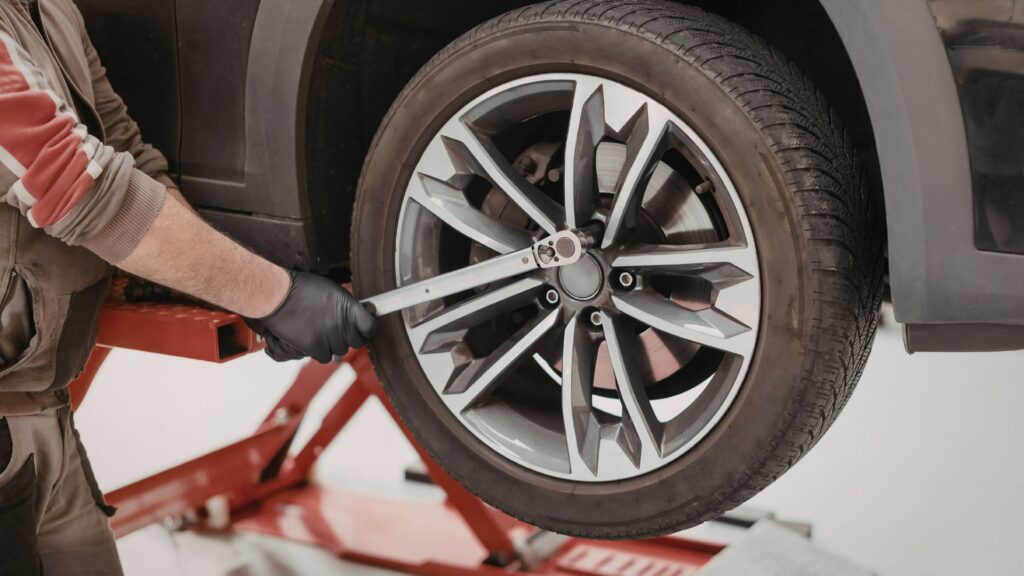
- Lug nuts are tightened to the manufacturer’s torque specifications.
- Tire pressure is checked and corrected.
- A quick inspection may be performed on brakes and car suspension components.
This process helps the tires wear more evenly and extends the life of your tires.
Why Tire Rotation Matters More Than You Think
Your front tires often wear faster, especially on a front-wheel drive car. That is because those tires handle steering, braking, and much of the vehicle’s weight.
On rear-wheel drive or 4-wheel drive vehicles, the wear patterns are different. Rear tires to the front might be moved differently depending on the setup. All-wheel drive systems require regularly rotating your tires to protect the drivetrain and avoid uneven tire wear.
If tires are not rotated on schedule, you may notice:
- Uneven tread wear
- Road noise
- Vibration
- Poor handling
- Reduced tire life
Regular tire rotation helps your tires wear evenly, improves fuel efficiency, and often leads to a smoother ride.
Different Types of Tire Rotation Patterns
The type of rotation depends on your vehicle and the type of tires installed.
Common patterns include:
Forward Cross
Typically used for front-wheel drive vehicles. The front tires move straight back, and the rear tires cross to the front.
Rearward Cross
Often used for rear-wheel drive. The rear tires move straight forward, and the front ones cross when moved to the back.
X Pattern
All four tires are crisscrossed from left to right and front to rear.
Directional tires and staggered setups change the rules. Some tires, based on their design, can only spin in one direction. In that case, the rotation is limited to left to right on the same axle. If you are unsure, refer to your owner’s manual or ask a professional. The right type of tire rotation protects tread wear and ensures even wear.
How Often Should You Rotate Your Tires?
Most manufacturers recommend you rotate your tires every 5,000 to 7,500 miles. A good reminder is to get the tires rotated when you get an oil change. A consistent rotation schedule prevents uneven wear and protects your tire balance. Think of it as basic vehicle maintenance that saves money long term.
If you recently installed new tires, it is especially important to start a regular tire routine early. Early rotations protect tire tread and reduce the risk of having to rebalance them too often.
Not sure if it is time to rotate? Learn the signs like vibration, pulling to one side, or visible uneven tire wear.
Can You Rotate Tires at Home?
Yes, but it takes preparation.
If you plan to rotate tires yourself, you will need:
- A jack and a jack stand
- A lug wrench
- A torque wrench
- A safe parking surface
Rotating the tires at home can take an hour, especially if you are unfamiliar with the process. You must tighten every nut correctly and follow the right pattern for your specific vehicle.
Many drivers start the job and then realize they need professional help to complete a tire rotation safely.
In a professional service bay, the job typically takes less time to rotate and includes an inspection. A trained technician also checks for tread wear, brake issues, and car suspension concerns that could affect tire wear.
Does Tire Rotation Include Tire Balancing?
Not always.
Tire balancing corrects weight distribution around the wheel to prevent vibration. If a shop notices uneven wear patterns or vibration complaints, they may recommend a rebalance or a full tire balance service.
A rotation alone moves the tires so they can wear more evenly. Balancing is a separate process, though both benefit tire wear and better fuel.
What About Quick-Service Shops?
You might wonder how this compares to a place like Jiffy Lube. While quick-service centers can handle basic maintenance, it is important that your vehicle receives a proper inspection, especially if it is due for suspension and brake repair services.
At Don & Joe’s Auto Service, we treat tire rotation services as part of a complete vehicle check. If your vehicle requires additional attention, such as alignment or Brake wear concerns, we will explain it clearly.
If you want more than just a quick swap, consider professional preventative maintenance services to keep your car safe and reliable.
How Long Does It Take to Get a Tire Rotation in Henry County, IN?
In Henry County, IN, most drivers can expect about 30 minutes for a standard tire rotation. If paired with an oil change and inspection, it may take closer to one hour.
The real question is not just how long a tire rotation takes, but whether it protects your vehicle long term. Regular rotation reduces wear, supports tire life, and improves performance. If your vehicle type includes front-wheel drive, rear-wheel drive, 4-wheel drive, or all-wheel drive, keeping up with your rotation schedule matters.
And if it is time to rotate, do not wait until the next tire rotation reminder light comes on.
For expert care backed by decades in the automotive industry, explore our complete auto repair services or suspension and brake repair services.
Conclusion
A tire rotation typically takes 30 to 45 minutes, but the benefits last much longer. Regularly rotating your tires helps them wear more evenly, improves handling, and extends the life of your tires. Whether you drive front-wheel drive, rear-wheel drive, or all-wheel drive, staying on schedule protects your investment.
If you are unsure about your tire rotation needs or want professional care you can trust, it is time to act. Call Don & Joe’s Auto Service in Henry County, IN, or schedule an appointment with our team.