

Ignition Coil vs Spark Plug: What's Really Behind Your Engine Misfire?
Your check engine light is on. Your car shakes at idle. It hesitates when you press the gas.
Sound familiar? Before you start worrying about major engine trouble, there’s a good chance the culprit is somewhere inside your vehicle’s ignition system, specifically, either a spark plug or an ignition coil.
These two parts work together to keep your engine running smoothly, but they fail in different ways. Knowing which one is the problem can save you time, money, and a lot of guesswork.
What’s the Difference Between a Spark Plug and an Ignition Coil?
They’re both parts of the ignition system, but they do very different jobs.
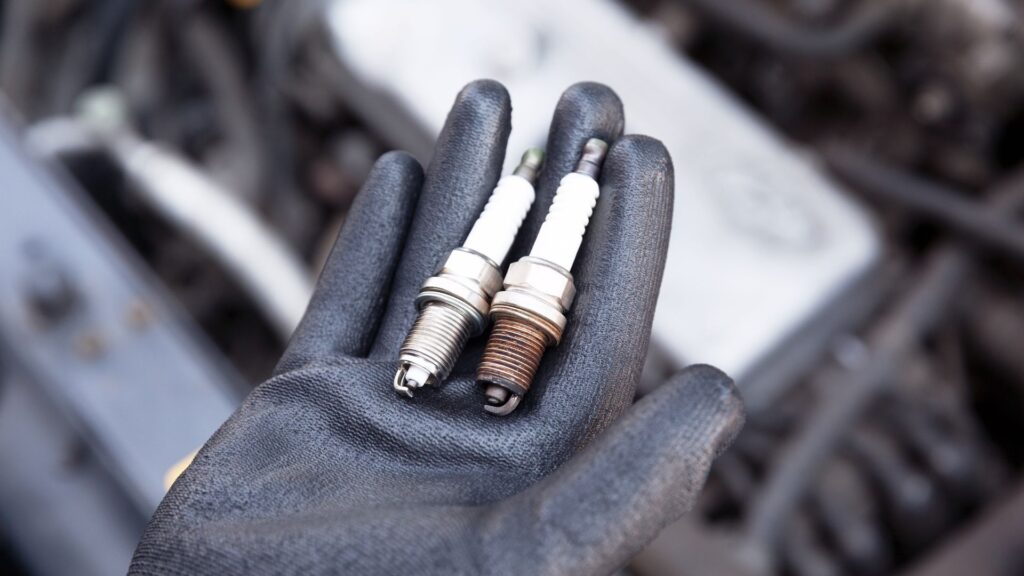
A spark plug is the part that actually fires inside the engine. It sits inside the combustion chamber and uses an electric spark to ignite the air-fuel mixture, which pushes the piston down and keeps your engine moving. Every cylinder has its own spark plug, and each one fires hundreds of times per minute.
An ignition coil is essentially a transformer. The ignition coil transforms the battery’s low voltage, typically around 12 volts from your automotive battery, into the high voltage needed to create a spark strong enough to ignite the fuel mixture. Without it, the spark plug has no energy needed to fire.
In short, the coil generates that voltage, and the spark plug uses it to fire inside the combustion chamber.
How a Bad Spark Plug Causes a Misfire
Spark plugs wear down over time. As the plug gap widens from normal wear or as carbon buildup coats the tip, the plug struggles to produce a spark consistently. When that happens, your engine misfires.
A bad spark plug is one of the most common reasons drivers experience rough idle, poor fuel economy, sluggish acceleration, and intermittent stalling. The longer you wait, the worse it gets.
Worn plugs ignite the air-fuel mixture inefficiently, which puts extra strain on your catalytic converter and can eventually cause engine damage.
Most manufacturers recommend replacing spark plugs every 30,000 to 100,000 miles, depending on the type. Copper plugs wear faster, while iridium and platinum plugs last longer.
Choosing the wrong heat range for your engine can also cause problems. The wrong plug can damage surrounding components if it runs too hot or too cold.
How a Bad Ignition Coil Causes a Misfire
A bad ignition coil tells a slightly different story. Instead of gradual wear like spark plugs, coils may fail suddenly or intermittently, which makes them trickier to diagnose.
When a coil fails, it can’t transform the battery’s low voltage into the high voltage needed to fire the spark plug. The result? That cylinder misfires, your engine stumbles, and your fuel economy drops. In some cases, you’ll notice misfire codes pointing to one cylinder specifically, which is a strong clue that a coil-on-plug setup may have a failing coil.
A faulty coil can also cause your engine to still misfire even after you’ve replaced the spark plugs. If you swapped new spark plugs and the problem didn’t go away, a bad ignition coil is likely the next thing to check.
Aftermarket coils vary in quality, so it’s worth letting a professional mechanic choose the right replacement coil for your specific vehicle.
Spark Plugs and Ignition Coils: How They Work Together
You can’t really talk about one without the other. Coil packs and spark plugs work as a team.
The ignition coil and spark plug are connected directly in modern coil on plug systems, meaning each cylinder gets its own coil. When either component fails, the whole cylinder suffers.
Unburned fuel can foul the oxygen sensor, damage the catalytic converter, and put stress on the crankshaft and compression system over time. What starts as a simple misfire can turn into something much more serious.
How to Diagnose the Problem
The fastest way to figure out whether you have a spark plug or coil issue is with a scan tool.
Engine misfires almost always trigger a code that points to the affected cylinder. From there, a mechanic can use a spark tester to check whether the plug or the coil is the weak link.
At Don and Joe’s Auto Service, the team uses advanced vehicle computer diagnostics to get accurate answers fast. Guessing at parts wastes money. Diagnostics point you directly to the source.
An ignition system inspection also checks plug gap, coil voltage output, and wire condition, giving a full picture of what’s going on under the hood.
When to Get Your Vehicle Checked
Don’t wait for a breakdown. If your car’s engine is misfiring, running rough, or showing a check engine light, it’s time to act. Staying on top of routine preventative maintenance services is the best way to catch spark plug and coil issues before they create bigger headaches.
For anything more involved, the ASE-certified team at Don and Joe’s Auto Service provides professional engine repair services and comprehensive auto repair services that Henry County, IN, drivers have trusted since 1977. Call 765-529-3555 or visit donandjoesautoservice.com to schedule your appointment.
Conclusion
A misfire rarely fixes itself. Whether the issue is a worn spark plug, a faulty ignition coil, or both, catching it early protects your engine and your wallet. Don and Joe’s Auto Service in Henry County, IN, has the experience and diagnostic technology to find the real problem fast. Skip the guesswork, get an accurate diagnosis, and drive with confidence knowing the repair was done right the first time. Reach out today and let the team get you back on the road safely.