

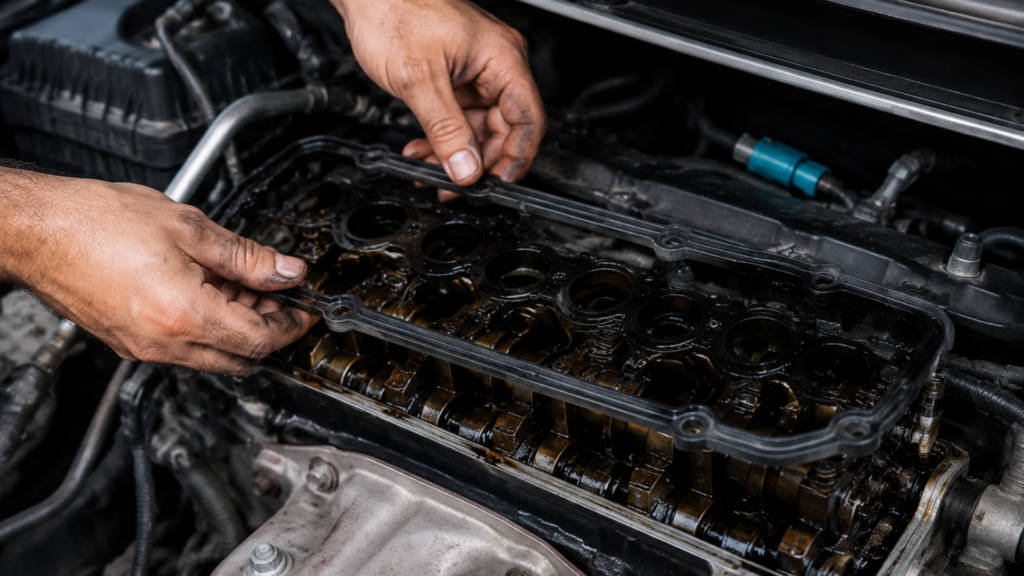
Valve Cover Gasket Oil Leak: Signs, Causes, and Quick Fixes
If you’ve ever noticed a faint burning smell after a drive or spotted a dark puddle under your car, there’s a good chance your valve cover gasket is trying to tell you something. It’s one of those parts most drivers never think about – until it becomes a problem.
The good news? Once you know what to look for, catching a failing valve cover gasket early can save you from a much bigger repair bill down the road.
What Is a Valve Cover Gasket and What Does It Do?
The valve cover, sometimes called a rocker cover, sits on top of the engine and shields the camshaft, rocker arms, and other components inside the cylinder head. The gasket seals the connection between the rocker cover and the engine block, keeping motor oil where it belongs – inside the engine.
Without a good seal, oil leaks out and can drip onto hot surfaces like the exhaust manifold or exhaust system, creating smoke, odors, and potential fire hazards. It’s a small part doing a very important job.
Common Signs of a Failing Valve Cover Gasket
You Smell Something Burning
When motor oil drips onto the exhaust manifold or other hot engine parts, it burns off and creates a distinct smell. If you notice this after parking or during a drive, do not ignore it.
Oil Spots Under Your Car
A leaking rocker cover gasket often leaves oily residue on the ground where you park. This is motor oil slowly working its way out of a compromised seal and pooling beneath the vehicle.
Low Oil Levels Between Changes
If you’re topping off your oil more frequently than usual, a slow valve cover gasket leak could be the culprit. A wet sump system depends on consistent oil levels to protect every moving part in the engine.
Visible Oil Around the Valve Cover
Pop the hood and look at the top of the engine. If you see oily buildup or residue around the valve cover or near the spark plug wells, that’s a clear indicator that the gasket is no longer sealing properly. Oil leaking into the spark plug area can also cause misfires and rough idling.
Engine Warning Light
While not exclusive to this issue, a dashboard warning light combined with any of the symptoms above warrants a closer look.
What Causes a Valve Cover Gasket to Fail?
Age and Heat Cycles
Most gaskets are made from materials like natural rubber, cork, or silicone composites. Over time, repeated heating and cooling cycles cause these materials to shrink, crack, and harden.
Aluminium valve covers are especially prone to warping, which breaks the seal even faster.
Over-Tightening or Under-Tightening
Using the wrong torque when installing the valve cover is a surprisingly common mistake. Too much force from a torque wrench can crush the gasket or crack an aluminium cover. Too little, and the seal never fully seats. Every valve cover has a manufacturer-specified torque value for the screws – skipping this step causes premature failure.
Sludge and Pressure Buildup
When oil isn’t changed regularly, it thickens into sludge. This buildup increases internal engine pressure, which pushes against the gasket from the inside and accelerates wear. Keeping up with oil changes is one of the simplest ways to extend the life of your gaskets.
Poor Installation or Cheap Materials
Sometimes a gasket fails simply because the previous replacement used a low-quality part or skipped proper surface preparation. The mating surfaces on both the cylinder head and rocker cover need to be clean and flat before a new gasket is installed.
Can You Fix a Valve Cover Gasket Leak Yourself?
Temporary Measures
Some drivers use RTV silicone or a sealant as a stopgap for minor seepage. Cleaning the area with brake cleaner and applying a thin bead of RTV silicone around the affected spot can slow a leak temporarily. This is not a permanent fix – it buys time but doesn’t address the underlying problem.
Proper Replacement
A full gasket replacement is the right solution. The process involves removing the valve cover, cleaning both mating surfaces thoroughly, and installing a new gasket – sometimes paired with fresh RTV silicone at corners or on V8 engine configurations with complex cover shapes. The cover is then torqued back down using a torque wrench to spec.
If the cover itself is warped, especially on aluminium designs, it may need resurfacing or replacement before a new gasket will seal correctly.
When to Call a Professional
If the leak is near the exhaust system, if oil is reaching the brake components, or if you’re dealing with a larger engine layout like a V8, it’s worth having a professional handle the repair. A misdiagnosed leak could actually be coming from the head gasket rather than the rocker cover – and those are two very different repairs in terms of cost and complexity.
Stop an Oil Leak In Your Valve Cover Gasket Before It Gets Worse
A valve cover gasket leak is not something to push off. Whether you’re smelling burning oil, losing motor oil faster than expected, or seeing visible residue near the cylinder head, acting early keeps repair costs manageable. The team at Don and Joe’s Auto Service in New Castle, IN, has handled engine repairs of every kind since 1977. If your car is showing any of these signs, call us at 765-529-3555 or learn more about our engine repair services to get your vehicle back in shape.