

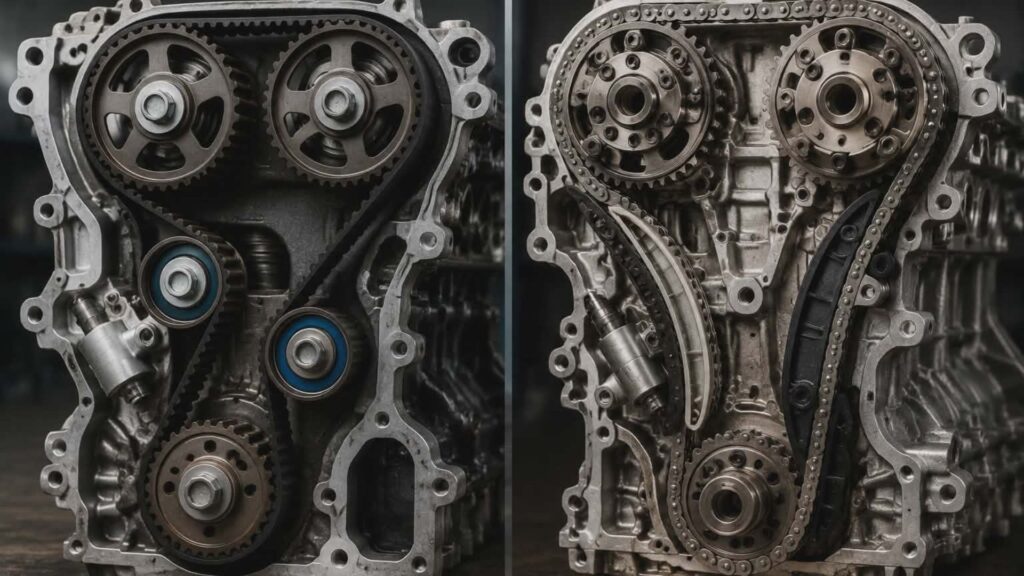
Timing Belt vs Timing Chain: Key Differences, Costs, and Which One Lasts Longer
If you’ve ever had a mechanic mention your timing belt or timing chain and felt completely lost, you’re not alone. Most drivers know these parts exist somewhere inside the engine, but few understand what they actually do – or why they matter so much. Getting clear on the difference between a timing belt and a timing chain could save you from a very expensive surprise down the road.
What Is a Timing System and Why Does It Matter?
Your engine works by coordinating a precise sequence of events happening hundreds of times per minute. The crankshaft moves the pistons up and down inside the cylinders, while the camshaft controls when the valves open and close to let fuel and air in and push exhaust out. If those two components fall out of sync, even slightly, the engine stops running correctly – or stops running at all.
That’s where the timing system comes in. Whether it’s a belt or chain, this component links the crankshaft and camshaft together and keeps everything firing in the right order. It’s one of the most important parts in a four-stroke engine, and when it fails, the consequences can be serious.
Timing Belt vs Timing Chain: What’s the Difference?
Let’s learn the difference between these two components before diving into which one is better for your situation.
How a Timing Belt Works
A timing belt is made of reinforced rubber – specifically, a rubber belt with nylon cords or fiberglass woven in to reinforce it. The belt wraps around the crankshaft pulley and the camshaft pulley, keeping both in sync. In some vehicles, it also drives the water pump, which is worth knowing if you’re planning maintenance.
The timing belt works quietly and smoothly, which is one reason automakers started using them. Belts are quieter than metal chains and lighter, which helps improve fuel efficiency. Many Hondas and other vehicles were widely equipped with timing belts in the 1980s and 1990s.
How a Timing Chain Functions
A timing chain is made of metal, similar in design to a bicycle chain. It connects the crankshaft and camshaft using metal links and runs inside the engine, where it can be lubricated by motor oil. Because the chain functions inside the oiled environment of the engine, it doesn’t require the same kind of scheduled replacement that a rubber belt does.
Guides and tensioners keep the chain running properly. A tensioner maintains the right amount of pressure so the chain doesn’t become slack. A stretched chain can cause timing issues that affect performance and, if ignored, lead to serious engine damage.
Key Differences Between Timing Belts and Chains
Understanding the key differences comes down to a few important categories.
- Material: A timing belt is made of reinforced rubber. A timing chain is made of metal.
- Location: The timing belt runs outside the engine, behind a protective cover. The timing chain runs inside the engine, bathed in oil.
- Noise: Belts are quieter during operation. Chains are generally louder but not always noticeably so.
- Lifespan: This is where things get interesting.
How Long Do Timing Belts and Chains Last?
How long do timing belts last? Most timing belts need to be replaced every 60,000 to 100,000 miles. Your owner’s manual will list the specific replacement interval for your vehicle. Skipping that service window is a gamble – belt failure doesn’t give much warning, and if the belt breaks while you’re driving, the damage can be catastrophic.
In interference engines – where the valves and pistons share the same space at different times – a broken belt means the valves and pistons collide. That’s engine damage that could cost thousands in professional engine repair services.
How long do timing chains last? Timing chains last significantly longer than belts. Many timing chains are designed to last the lifetime of the engine if the vehicle is properly maintained. That said, they’re not immune to failure over time. Worn guides and tensioners, or poor maintenance habits, can cause problems.
Advantages and Disadvantages of Timing Belts and Chains
Advantages of Timing Belts
- Quieter operation
- Lighter weight, which can improve efficiency
- Lower upfront replacement cost compared to chain replacement
Disadvantages of Timing Belts
- Must be replaced on a set schedule
- Belt breaks can cause major engine damage, especially in interference engines
- May cost more over a vehicle’s lifetime due to repeat replacements
Advantages of Timing Chains
- Longer lifespan – chains last longer than belts in most cases
- Lubricated by engine oil, reducing wear
- Less likely to fail suddenly without early warning signs
Disadvantages of Timing Chains
- Heavier and can be noisier
- Chain replacement is more labor-intensive if it fails
- Requires regular oil changes to keep the chain properly lubricated
Which Vehicles Use Timing Belts vs Timing Chains?
Whether your vehicle uses a belt or a chain depends largely on its make, model, and year. Many older vehicles and some diesel engine models are equipped with timing belts. Some diesel trucks and SUVs use timing belts.
Larger vehicles like the Chevrolet Tahoe, Chevrolet Silverado, and other full-size trucks and SUVs from Chevrolet tend to use timing chains in their modern engines. Newer vehicles across most manufacturers have shifted toward timing chains for their longevity. That said, some compact sport utility vehicles and older cars still use belts, so it’s always worth checking your service records or asking a trusted mechanic.
Warning Signs Your Timing Belt or Chain Needs Attention
Don’t ignore these warning signs. Whether you have a belt or a chain, watch for:
- A ticking or rattling noise from the front of the engine
- The engine is misfiring or running rough
- Oil is leaking near the timing belt cover
- The check engine light appears alongside performance issues
If you notice any of these, bring your vehicle in for advanced computer diagnostics right away.
Catching timing component problems early can prevent much more expensive repairs later.
What Does Timing Belt and Timing Chain Service Cost?
Timing belt replacement typically runs between $300 and $500 for most vehicles, though that number climbs if the water pump, tensioner, and pulleys are replaced at the same time, which is generally recommended. Timing belt replacement is one of those services where doing it right the first time matters.
Timing chain replacement can range from $800 to well over $1,500, depending on the engine design and the mileage on the vehicle. Because it’s inside the engine, labor costs are higher.
The good news is that most drivers won’t face chain replacement if they stay current on routine preventative maintenance services.
How to Make Your Timing Components Last
The best way to protect your timing system is straightforward. Follow your manufacturer’s recommended service interval for belt replacement. For a timing chain, the most important thing you can do is keep up with regular oil changes. Motor oil lubricates the chain, tensioner, and guides. Old or low oil accelerates wear and can shorten the life of the chain significantly.
It also helps to address timing issues early. If you notice symptoms, don’t wait. Catching a stretched chain or a worn tensioner during a routine inspection is far better than dealing with major repairs after a full failure. The team at Don and Joe’s provides comprehensive auto repair services and can inspect your timing system as part of a full engine check.
Conclusion
The timing belt vs timing chain debate comes down to your specific vehicle, your maintenance habits, and how long you plan to keep the car. Timing belts need more frequent attention, while timing chains generally last longer with proper care. Either way, staying on top of service is what keeps your engine running strong. At Don and Joe’s Auto Service in Henry County, IN, the ASE-certified team is ready to help you understand what your vehicle needs. Call 765-529-3555 to schedule your next service.