

Vehicle Heater Not Working? 6 Common Causes and Quick Fixes
There is nothing quite like turning on your car heater on a cold Indiana morning, only to get a blast of cold air in return. If your car heater isn’t working, you are not alone. It is one of the most frustrating vehicle problems, especially when temperatures drop, and you are relying on your cabin heat to stay comfortable and safe on the road.
The good news is that most heater problems have identifiable causes. Understanding what is going wrong can help you decide whether this is something you can address yourself or whether it is time to call in the professionals.
Reasons Why Your Car Heater Is Not Blowing Hot Air
Before jumping to conclusions, it helps to know how your heater actually works. Your car’s heating system uses heat from the engine coolant to warm the air that flows into your cabin. The coolant absorbs heat from the engine, travels through the heater core, and then the blower motor pushes air through the heater core and into your vehicle’s vents. When any part of that process breaks down, your heater isn’t blowing hot air as it should.
Here are the most common possible causes behind a broken heater.
Low Coolant Level
One of the most straightforward reasons why your car heater stops working is a low coolant level. The heater core functions like a small radiator inside your dashboard, and it needs a steady supply of hot antifreeze to warm the air coming into your cabin. If the coolant level is too low, there simply is not enough hot fluid flowing through the system to produce warm air from the heater.
Check your coolant level by locating the reservoir under the hood. If it is below the minimum line, topping it off may restore heat quickly. However, consistently low coolant can signal a leak somewhere in the cooling system, which needs immediate attention to prevent the engine from overheating.
A Faulty Thermostat
The thermostat controls when coolant flows from the engine to the radiator. If you have a faulty thermostat that is stuck open, coolant circulates continuously without ever reaching the proper engine temperature. As a result, the heater core never receives enough hot coolant to produce warm air, leaving you with nothing but lukewarm air or cool air at best.
Replacing a thermostat is a relatively affordable fix, but it needs to be done correctly to avoid engine overheating or other complications. A faulty heater situation caused by a bad thermostat is easy to diagnose with the right tools.
Clogged Heater Core
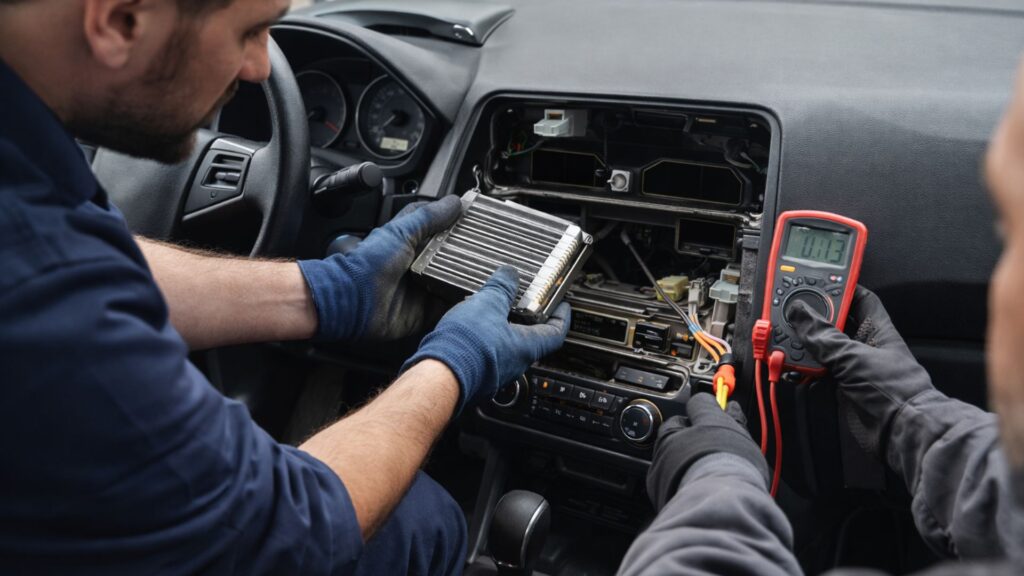
The heater core can become restricted over time. Rust, debris, and mineral buildup inside the cooling system can clog the small tubes inside the heater core, preventing coolant from flowing through properly. When coolant flow to the heater is blocked, the heater core won’t transfer heat from the engine coolant to the cabin air the way it should.
A clogged heater core sometimes comes with additional symptoms, like a sweet antifreeze smell inside the cabin or foggy windows. If you notice those signs, it is worth having the system inspected before the problem escalates.
Blower Motor Issues
Even if your heater core is working correctly, a malfunctioning blower motor means no air from the heater core will reach you. The blower motor pushes air through the system and out through the vents. If the motor itself, the resistor, or even a fuse related to the blower stops working, you might get heat in your vehicle that stays cold because the airflow simply is not happening.
If you notice the heater is not blowing at all on certain fan settings, a worn resistor or failing blower motor is likely the culprit.
Air Pockets in the Coolant System
Air pockets in the coolant system are another sneaky cause of heater problems. Trapped air in the lines can prevent the heater from circulating engine coolant to the cabin the way it should.
This often happens after a coolant flush or repair if the system is not properly bled. Bleeding the cooling system removes air pockets and restores normal coolant flow through the heater core.
Heater Control Valve Problems
The heater control valve regulates how much coolant flows into the heater core. A damaged or stuck heater control valve can restrict or completely cut off coolant from flowing, which will prevent the heater from producing hot air. This is a component that does not always get immediate attention, but it plays a key role in a functioning heater.
When to See a Professional
Car heater problems can range from a simple coolant top-off to more complex repairs involving the heater core or blower motor. If you have checked the coolant level and the heater isn’t working properly, it is time to have it professionally diagnosed. Most issues causing your car heater to underperform are best handled by an experienced technician with the right diagnostic tools.
At Don and Joe’s Auto Service, the team offers auto heating and cooling system repair alongside professional engine repair services, routine preventative maintenance services, and advanced vehicle computer diagnostics to pinpoint exactly what is causing your vehicle’s heater to not perform as expected.
Conclusion
A car heater isn’t working correctly when something breaks down in the heating system, whether it includes low coolant levels, a broken heater core, or a blower motor issue. Do not ignore the warning signs. The team at Don and Joe’s Auto Service in New Castle and Henry County, IN, has been helping drivers stay warm and safe since 1977.
If your vehicle’s heater isn’t keeping you comfortable this season, give them a call at 765-529-3555 or visit donandjoesautoservice.com to schedule your inspection today.