

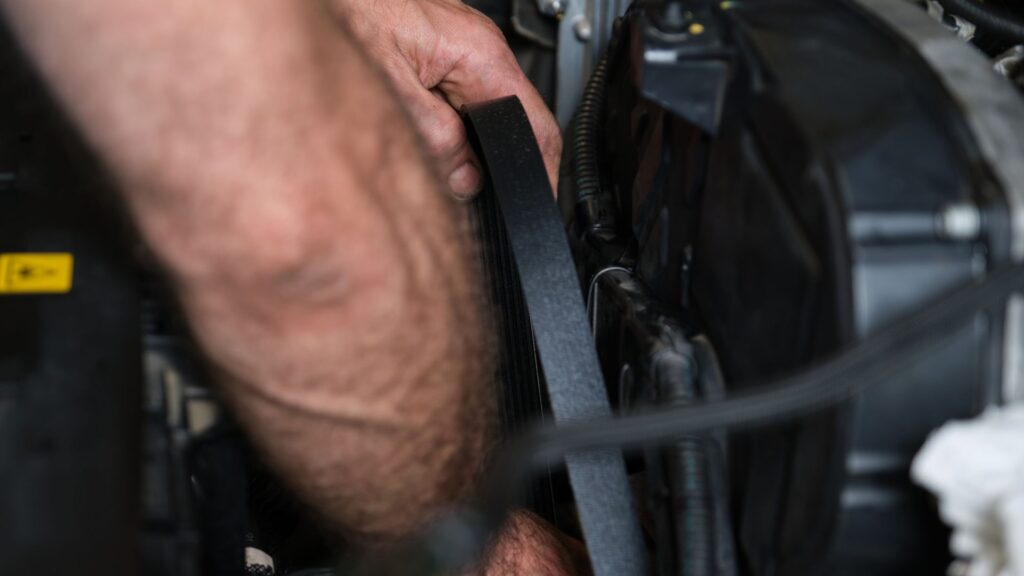
When to Replace Your Timing Belt
That little sticker your mechanic slaps on your windshield is a helpful reminder, but when it comes to your timing belt, it does not tell the whole story. Mileage is just one piece of the puzzle. Ignoring the other signs can leave you stranded – or worse, facing a complete engine rebuild.
What Does a Timing Belt Actually Do?
The timing belt is a reinforced rubber belt – typically made from natural rubber or synthetic compounds – that connects your engine’s crankshaft to the camshaft. Its entire job is to keep these two components moving in perfect sync.
Why does that matter? Because your camshaft controls when the poppet valves open and close inside each cylinder. If that timing slips even slightly, the valves and pistons can collide inside the combustion chamber. In an interference engine, that collision means serious, expensive damage to your internal combustion engine.
The Mileage Guideline: A Starting Point, Not a Finish Line
Most manufacturers recommend replacing the timing belt somewhere between 60,000 and 100,000 miles. Honda, for example, has historically recommended replacement around the 60,000 to 90,000-mile mark depending on the model and year.
But here is the problem. That guideline assumes average driving conditions, moderate temperatures, and proper maintenance history. Your vehicle may have lived a harder life than that.
Signs Your Timing Belt Needs Replacement Now – Regardless of Mileage
Visible Cracking or Fraying
If an auto mechanic or technician pulls the timing belt cover and sees cracks, fraying, or glazing on the belt surface, that belt needs to go. Natural rubber degrades over time, even if the mileage looks fine on paper.
Engine Misfires or Rough Running
When the belt begins to wear and stretch, the timing between the crankshaft and camshaft can drift. This causes misfires, rough idling, or a noticeable drop in fuel efficiency. Your engine is essentially working against itself.
Ticking Noise from the Engine
A ticking or slapping sound near the top of the engine can signal that the timing belt is loose or that the tensioner pulley is failing. The pulley keeps constant pressure on the belt – if it weakens, the belt can skip a tooth and throw off your engine timing entirely.
Oil Leaks Near the Belt
A leaking camshaft or crankshaft seal can soak the timing belt in oil. Oil destroys rubber fast. A belt that looks young by mileage can be completely compromised if it has been sitting in a slow oil drip.
Your Car Has Been Sitting
Time matters just as much as miles. A vehicle that has sat unused for several years – even with low mileage – can have a belt that has dry-rotted or stiffened. A professional inspection is essential before trusting that belt on a long drive.
Do Not Forget the Water Pump
Most experienced technicians will tell you this: when you replace the timing belt, replace the water pump at the same time. The pump is typically driven by the same belt and sits right there in the same assembly. If the pump fails later, you are paying for the same labor all over again.
The same logic applies to the tensioner pulley and any idler pulleys in the system. Replace them together and save yourself the headache.
Interference vs. Non-Interference Engines: Why It Matters
Not every engine reacts the same way to a broken timing belt. In a non-interference engine, a snapped belt will shut the car down but will not necessarily destroy the engine. In an interference engine, the pistons and valves share the same space – and without the belt keeping everything synchronized, they collide.
Many popular vehicles run interference engines. If yours does, a neglected timing belt is not just an inconvenience – it is a potential total-engine event. An inspection before that point is always worth it.
When to Replace Your Timing Belt Before It Fails
Your mileage sticker is a guideline, not a guarantee. Age, heat, oil exposure, and wear all affect your timing belt in ways that an odometer reading cannot capture. If your vehicle is due for a belt inspection – or overdue – the ASE-certified technicians at Don and Joe’s Auto Service in New Castle, IN are ready to take a look. Schedule your engine repair or inspection before a worn belt turns into a much bigger problem. Call 765-529-3555 today.