

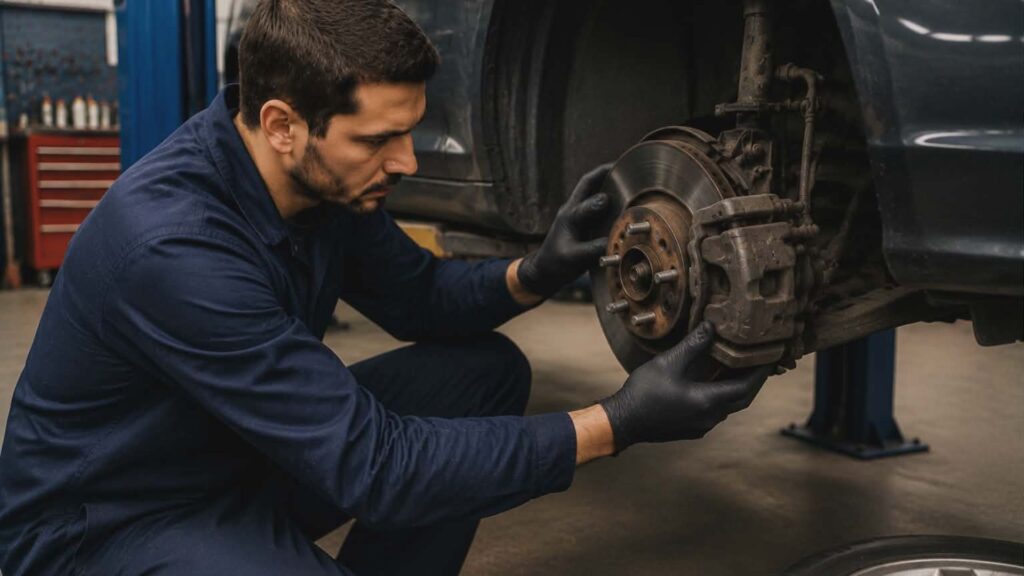
Why Does My Car Shake When I Brake? Common Causes and How To Fix It
That unsettling shudder you feel when slowing down is more than just annoying. It is your vehicle telling you something is wrong. If your car shakes when you brake has become a regular occurrence, understanding what is behind it can save you time, money, and a whole lot of stress.
Let’s break down the common causes of car shaking during braking and what you can actually do about it.
How Brakes Work – A Quick Refresher
Before diving into problems, it helps to understand the basics. When you press the brake pedal, brake fluid transfers the force from your foot to the brake components at each wheel. For disc brakes, brake pads clamp down onto a rotor, creating friction that slows the car. Drum brakes work slightly differently, but the principle is the same: controlled friction brings your vehicle to a stop.
When any part of this process is off, you can feel it – sometimes through the pedal, sometimes through the steering wheel, and sometimes through the entire car.
Common Causes of Car Shaking When You Brake
Warped or Uneven Rotors
This is the most common reason a car shakes when braking. Rotors are the large metal discs that brake pads clamp against to slow your vehicle. Over time, heat, hard braking, and everyday wear cause rotors to lose their flat, even surface.
When rotors are warped or have developed thickness variation, the brake pads cannot make smooth, consistent contact with the rotor. Instead, you get a pulsation – that rhythmic shake or vibration you feel when you apply the brakes. Rotor thickness variation can make the brake pedal pulse, grab, or vibrate rapidly, depending on how uneven the surface has become.
A warped rotor does not fix itself. Getting rotors resurfaced or replaced is the proper way to resolve the issue.
Worn-Out Brake Pads
Brake pads wear down over time. That is just how friction works. Worn-out brake pads lose the material needed to grip the rotor evenly, which can cause vibration and even a high-pitched squealing sound.
When brake pads are too thin, they contact the rotor unevenly, which can cause the car to shake when you brake. In severe cases, the metal backing plate of the pad makes direct contact with the rotor, which can cause brake damage quickly and lead to costly repairs.
Brake pad replacement is one of the most straightforward fixes in the brake system, and it should never be put off.
Seized or Sticky Brake Calipers
The caliper is the component that holds the brake pads and squeezes them onto the rotor when you press the brake pedal. If a caliper gets stuck or seizes up, it can apply uneven pressure to the brake pads.
This uneven clamping can cause brake drag on the rotor, generate excess heat, and make your car vibrate or even pull to one side while braking. You might also notice a burning smell after braking hard. Faulty brake calipers are a safety issue that needs immediate attention.
Issues with Brake Fluid or the Brake Booster
Low or contaminated brake fluid can affect how consistently pressure is applied throughout the brake system. If the master cylinder or brake booster is not functioning properly, you may notice inconsistent pedal feel and vibration in the steering wheel when you press the brake.
Keeping brake fluid clean and at the correct level is a simple part of routine preventative maintenance services that often gets overlooked.
Worn or Damaged Suspension Components
Not every shake when braking comes from the brake system itself. Worn or damaged suspension parts – like worn wheel bearings or loose steering components – can cause the car to shake, especially at higher speeds or when you apply the brakes.
If your steering wheel wiggles or the front end of the car feels loose during braking, worn suspension could be to blame. Wheel alignment and tire balance issues can also contribute to uneven tire wear and braking instability.
When Does the Shaking Happen?
Paying attention to when the shaking occurs helps narrow down the cause.
- Shaking at high speeds or highway speeds when braking often points to warped rotors or tire balance issues
- Shaking that starts around 40 mph when you press the brake – can indicate rotor or pad problems, or even wheel bearings
- Shaking only when braking hard – may suggest the rotors are warped from excessive heat
- The steering wheel shakes when braking, but the pedal feels fine – often tied to the front brakes or suspension
What To Do If Your Car Is Vibrating When You Brake
Do not ignore it. Braking issues tend to get worse – and more expensive – the longer they go unaddressed. A brake inspection can identify whether the problem is with your rotors and pads, calipers, brake fluid, or something further up the line, like the suspension.
At Don and Joe’s Auto Service, our technicians will diagnose the problem accurately using advanced vehicle computer diagnostics and handle everything from brake pad replacement to full suspension and brake repair. We also offer expert auto repair services and professional driveline repair services for issues that go beyond the brake system.
Corrosion, dirt and debris, and braking habits all play a role in how quickly brake components wear. Getting a vehicle inspection done before problems snowball is always the smarter move.
If you have had new brakes put on recently and still feel a shake, do not assume the brake job was incomplete – let a professional inspect the full system to fix the root cause.
Conclusion
A car that shakes when braking is not something to ignore or delay. From a warped rotor to worn-out brake pads or a stuck caliper, there are several fixable reasons your car is doing what it is doing. The team at Don and Joe’s Auto Service in Henry County, IN, has been diagnosing and repairing these issues since 1977. Give us a call at 765-529-3555 or visit donandjoesautoservice.com to schedule your brake inspection today.