

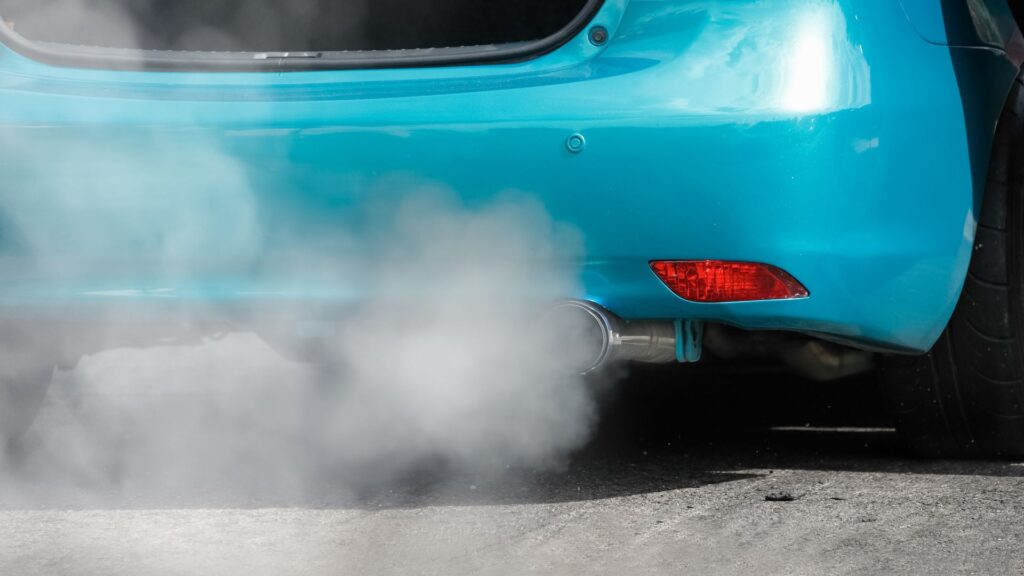
White Smoke From Your Exhaust Means Coolant is Burning
You’re sitting at a stoplight and notice a thick cloud of white smoke billowing from your exhaust. Maybe it clears up after a minute, or maybe it keeps pouring out. Either way, your stomach drops a little. That’s a normal reaction, and honestly, it’s the right one.
White smoke from your exhaust is not something to ignore. It almost always points to coolant entering the combustion chamber, and that means something inside your engine has gone wrong.
What Is That White Smoke, Really?
Not all smoke from an exhaust pipe is the same. On a cold morning, you might see a thin, wispy vapor that disappears quickly. That is just condensation burning off as the engine warms up. Water naturally collects in the exhaust system overnight, and when the engine heats up, it turns to steam and exits through the tailpipe. That is completely normal.
What is not normal is thick, heavy, white smoke that lingers even after the engine has warmed up. That kind of smoke has a distinct sweetish smell, almost like something syrupy is burning. That smell comes from coolant – the fluid inside your radiator that keeps your engine from overheating – mixing where it should never be: inside the combustion chamber.
Why Is Coolant Getting Into the Engine?
The most common reason coolant ends up inside the combustion chamber is a blown head gasket. The head gasket sits between the engine block and the cylinder head, forming a sealed barrier that keeps oil, coolant, and combustion gases in their proper lanes.
When that gasket fails, coolant can seep past the seal and into the cylinders. Once it is inside, the piston compresses it along with the air-fuel mixture, and when combustion happens, the coolant burns off and exits as white smoke through the exhaust.
Other Causes Worth Knowing
A blown head gasket is the most common culprit, but it is not the only one. Here are a few other possibilities:
- Cracked cylinder head – High heat or a sudden temperature change can crack the cylinder head, allowing coolant to leak into the combustion area.
- Cracked engine block – Less common, but a cracked engine block can create the same problem. This is a more serious and costly repair.
- Failed intake manifold gasket – The inlet manifold gasket can also fail and allow coolant to enter the engine in some vehicle designs.
Vehicles like the Subaru WRX and certain INFINITI models have been known to experience head gasket issues, but truthfully, this problem can happen to any car, regardless of make or model.
Signs That Coolant Is Actually Burning
White smoke from the exhaust is the most obvious sign, but it usually comes with other clues. Pay attention to these:
- Your coolant reservoir bottle keeps getting low without any visible leak under the car.
- You notice a sweet smell coming from the exhaust or under the hood.
- Your engine is overheating more often than it used to.
- You find milky or frothy motor oil on the dipstick, which means coolant and oil are mixing inside the engine.
- Spark plugs may appear fouled or discolored if coolant has been entering the cylinder repeatedly.
If you are seeing two or more of these signs together, the situation is likely more serious than a simple repair. This is not a problem that fixes itself or improves over time.
Why You Should Not Keep Driving
It is tempting to keep driving and hope the problem sorts itself out. It will not. When coolant mixes with motor oil, it strips the oil of its lubricating properties. That means the internal moving parts of your engine – pistons, valves, poppet valves, and more – are not being protected the way they should be.
Continued driving with a coolant leak into the engine can cause permanent damage to the engine, warp the cylinder head, or lead to a complete engine failure. What might start as a gasket repair can turn into a full engine rebuild or replacement if left alone too long.
Unlike a quick oil change stop at a place like Jiffy Lube, diagnosing white smoke properly requires real diagnostic equipment and experienced technicians who understand engine systems from the inside out.
Getting It Diagnosed the Right Way
Pinning down exactly where coolant is entering the engine requires a proper pressure test, a cooling system inspection, and sometimes a combustion leak test. At Don and Joe’s Auto Service in New Castle, IN, the team has been diagnosing and repairing these kinds of engine problems since 1977. With ASE-certified technicians and state-of-the-art diagnostic tools, they can tell you exactly what is going on before any guesswork leads to unnecessary repairs.
If your car has an electric cooling fan, fuel injection system, or any other modern component tied into engine management, a proper computer diagnostic can also reveal fault codes that point toward the source of the problem.
What to Do Next About White Smoke From Your Exhaust
White smoke from your exhaust is a smoke signal you should not dismiss. Whether it is a blown head gasket, a cracked cylinder head, or a coolant leak working its way into the engine, the fix needs to happen sooner rather than later. The longer you wait, the more damage builds up – and the more expensive the repair becomes.
If you are seeing white smoke and want a straight answer about what is going on, reach out to the team at Don and Joe’s for a proper engine repair diagnosis. Call 765-529-3555 to get started.