

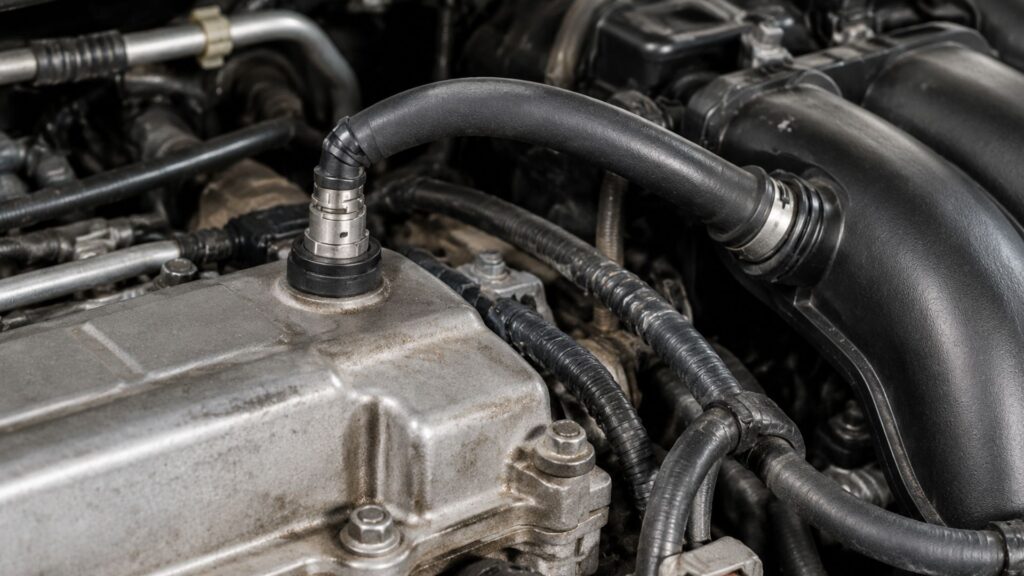
What Does a PCV Valve Do to Your Engine
Most drivers have never heard of a PCV valve until a mechanic mentions it during a routine inspection. It sounds minor, almost forgettable. But this small component plays a surprisingly important role in keeping your engine running clean and healthy.
If you’ve been wondering what a PCV valve does and why it matters, you’re in the right place. Let’s break it down in plain English.
What Is a PCV Valve?
PCV stands for Positive Crankcase Ventilation. The PCV valve is a small, one-way component – usually just a few inches long – that helps route gases from the crankcase to the intake manifold.
The crankcase is the lower part of your engine that houses the crankshaft. During normal engine operation, combustion gases can slip past the piston rings and into the crankcase. These gases are called blowby gases, and if they build up, they cause real problems.
The PCV valve is the engine’s way of managing those gases before they do damage.
What Does a PCV Valve Do, Exactly?
Here’s the simple version: the PCV valve redirects harmful gases from the crankcase back into the intake manifold so the engine can burn them off instead of releasing them or letting them sit.
Without this system, blowby gases would build up pressure inside the crankcase. That pressure can push past gaskets and seals, causing oil leaks. It also forces moisture and acidic byproducts into the engine oil, which breaks down the oil much faster than normal.
Think of the PCV valve as a pressure relief system that also doubles as an emissions control device. It serves your engine and the environment at the same time.
Why the PCV Valve Matters for Engine Health
A working PCV valve does several things that directly protect your engine over time.
It reduces internal pressure, which protects gaskets and seals from premature failure. It removes moisture and contaminants from the crankcase, keeping your oil cleaner for longer. It also prevents sludge buildup, which is one of the leading causes of accelerated engine wear in vehicles that don’t get consistent preventive maintenance.
In short, this tiny valve helps your oil do its job better and keeps the inside of your engine from turning into a mess.
What Happens When a PCV Valve Fails?
Like any mechanical component, the PCV valve can wear out or get clogged. When it stops working properly, the symptoms tend to show up in ways that are easy to misread as bigger problems.
Common Signs of a Bad PCV Valve
- Increased oil consumption is one of the first red flags. When crankcase pressure isn’t properly vented, it can push oil into places it shouldn’t go, and the engine ends up burning more oil than usual.
- Oil leaks are another telltale sign. Excess pressure in the crankcase forces oil out through gaskets and seals, which leads to visible leaks under the vehicle or around engine components.
- Rough idle or engine hesitation can also point to a failing PCV valve. If the valve is stuck open, it creates a vacuum leak that disrupts the air-fuel mixture going into the engine. If it’s stuck closed, pressure builds and causes its own set of issues.
- Dirty or milky engine oil can indicate moisture or other contamination, although it may have causes beyond a PCV system problem.
- Check engine light – while not exclusive to PCV valve issues, a fault in the PCV system can trigger a diagnostic trouble code that turns on your check engine light.
How Often Should a PCV Valve Be Replaced?
Most manufacturers recommend inspecting the PCV valve as part of regular engine maintenance, though the replacement interval varies by vehicle. A general rule of thumb is to check it every 20,000 to 50,000 miles, but always refer to your owner’s manual for your specific vehicle.
The good news is that PCV valves are typically inexpensive parts. Catching a failing valve early can save you from much more costly repairs down the road, like fixing blown gaskets or dealing with sludge damage inside the engine.
PCV Valve and Engine Sludge: The Connection Most Drivers Miss
Engine sludge is one of those issues that builds silently over time. It forms when oil breaks down and mixes with contaminants – moisture, blowby gases, and heat. The result is a thick, gel-like residue that can clog oil passages and starve engine components of lubrication.
A properly functioning PCV valve reduces the amount of moisture and harmful gases that mix with your oil in the first place. When the valve fails and goes unaddressed for too long, sludge buildup becomes a real risk, especially in vehicles that spend a lot of time on short trips where the engine never fully warms up.
This is one reason why preventive maintenance is so important. Catching a small issue like a clogged PCV valve early is far better than dealing with the aftermath.
Is a PCV Valve Check Part of Routine Maintenance?
It should be. A PCV valve inspection is a straightforward part of engine maintenance that often gets overlooked because the part is so small and inexpensive. Many drivers don’t even know it exists until something goes wrong.
If you bring your vehicle in for an oil change or general inspection, a technician can check the PCV valve quickly. A simple shake of the valve can sometimes tell you whether it’s stuck, and a visual inspection can reveal if it’s clogged or deteriorated.
At Don and Joe’s Auto Service in New Castle, IN, ASE-certified technicians include this kind of detail-oriented inspection as part of their overall approach to keeping your vehicle in good shape. They’ve been doing this since 1977, and that kind of experience means they know which small parts cause big headaches when ignored.
What Does a PCV Valve Replacement Actually Involve?
Replacing a PCV valve is one of the simpler engine maintenance tasks out there. In many vehicles, it’s a matter of locating the valve, pulling it out, and pressing in a new one. The connected hoses should also be inspected for cracks or buildup at the same time.
The entire process usually takes less than an hour, often much less. The cost is relatively low, especially compared to the repairs that a neglected PCV system can eventually require.
If the PCV hose is also cracked or blocked, that needs to be addressed at the same time. A new valve won’t do much good if the hose connecting it to the intake manifold is damaged.
FAQs About PCV Valves
Can I drive with a bad PCV valve?
You can, but it’s not a good idea. A failing PCV valve puts extra stress on your engine’s seals, accelerates oil contamination, and can lead to larger and more expensive repairs over time. It’s a small fix that’s worth addressing promptly.
Can a bad PCV valve cause an oil leak?
Yes. When the crankcase pressure isn’t properly relieved, that pressure pushes against gaskets and seals. Over time, this leads to oil leaks that can become significant if left unaddressed.
Does a PCV valve affect fuel economy?
It can. A stuck-open PCV valve creates a vacuum leak that affects the air-fuel mixture, which can cause the engine to run inefficiently. This may show up as increased fuel consumption or a rough-running engine.
How do I know if my PCV valve is clogged vs. stuck open?
A clogged PCV valve tends to cause oil leaks, sludge buildup, and increased crankcase pressure. A stuck-open valve behaves more like a vacuum leak – rough idle, engine hesitation, or a lean-running condition. A technician can diagnose which situation you’re dealing with quickly using basic inspection tools and computer diagnostics.
Is PCV valve replacement covered under warranty?
At Don and Joe’s Auto Service, most parts and labor are backed by a 1-year warranty, so if you have the PCV valve replaced there, you have that peace of mind built in.
Keep Your Engine Healthier With a Working PCV Valve
The PCV valve is a small part with a big job. It protects your engine from pressure buildup, keeps your oil cleaner, and helps prevent sludge – all for the cost of a very inexpensive component. Ignoring it can lead to oil leaks, engine wear, and repairs that cost far more than a simple valve replacement.
If your vehicle is due for a checkup or you’re noticing any of the symptoms mentioned above, reach out to the team at Don and Joe’s Auto Service at 765-529-3555 or learn more about their engine repair services to get your vehicle properly diagnosed and back on the road.