
Solid Check Engine Light Vs Flashing: What Each Warning Really Means
That little light on your dashboard can send a wave of anxiety through any driver. But here is the thing – not all check engine lights are created equal. Whether it is glowing steadily or blinking at you like an alarm, the signal your car is sending means something very different in each case.
Understanding the difference could save you from a costly repair down the road or protect your engine from serious damage right now.
What the Solid Check Engine Light Is Telling You
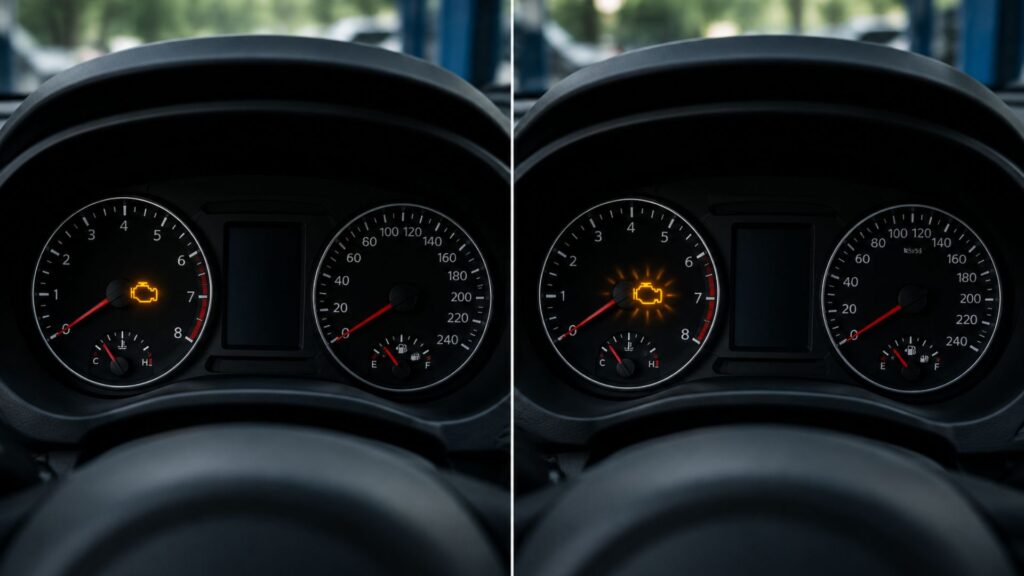
When the check engine light stays on without flickering, your vehicle’s on-board diagnostics system has detected a problem – but not necessarily an emergency. The computer has logged a fault code that an auto mechanic can read with a diagnostic scanner.
Common reasons for a steady light include a failing oxygen sensor, spark plugs, a loose gas cap affecting the air-fuel ratio, a worn spark plug, or an issue with the exhaust system. A failing catalytic converter is another frequent culprit that triggers a solid light, often alongside reduced fuel efficiency.
Should You Keep Driving?
A steady light usually means you have some time to schedule a proper inspection rather than pull over immediately. That said, ignoring it is never a smart move. Small problems – like a misfiring cylinder or a weak ignition coil – can quietly grow into much bigger ones if left unaddressed.
What a Flashing Check Engine Light Really Means
A flashing check engine light is a different story entirely. This is your car telling you something is seriously wrong, right now.
In most cases, a blinking light points to an active engine misfire. When a cylinder misfires repeatedly, unburned fuel enters the exhaust system. That raw fuel can overheat and destroy your catalytic converter in a short amount of time. You might also notice engine knocking, rough idling, or a sudden drop in power.
What You Should Do Immediately
If your check engine light is flashing, do not push your luck. Reduce your speed, avoid heavy acceleration, and get to a trusted auto mechanic as soon as possible. Continuing to drive under these conditions risks serious damage to your ignition system, exhaust components, and engine internals.
Here is a quick comparison to keep in mind:
- Solid light – A detected fault that needs attention soon, but is not always an immediate emergency
- Flashing light – An active, serious problem that requires prompt action to prevent major damage
How Technicians Diagnose the Problem
Whether your light is solid or flashing, the diagnostic process starts with reading the fault codes stored in your vehicle’s computer. From there, a skilled technician will inspect the relevant components – whether that is the ignition coil, spark plugs, oxygen sensor, fuel delivery system, or something deeper inside the engine.
At Don and Joe’s Auto Service in New Castle, IN, ASE-certified technicians use state-of-the-art diagnostic technology to pinpoint the issue accurately. There is no guesswork, just honest answers and reliable repairs backed by a 1-year warranty on most parts and labor.
Common Issues Behind Both Types of Warnings
Understanding what tends to trigger each warning can help you have a more informed conversation with your mechanic.
For a steady light, common causes include:
- Faulty oxygen sensor affecting fuel efficiency and emissions
- Worn spark plugs cause incomplete combustion
- A damaged or aging catalytic converter
- A loose or cracked fuel cap disrupts fuel vapor pressure
- Issues with the electric battery or charging system
For a flashing light, the usual suspects are:
- Severe engine misfires from a bad ignition coil or spark plug
- Fuel delivery problems are causing an incorrect air-fuel ratio
- Exhaust gas buildup from a clogged catalytic converter
- Internal engine issues affecting one or more cylinders
Why Acting Quickly Always Pays Off
Delaying a check engine light diagnosis – whether solid or flashing – almost always results in higher repair costs. A sensor issue caught early is a fraction of the cost of a damaged catalytic converter or a rebuilt engine. Your car is communicating with you through that dashboard warning, and it is worth listening to.
What to Do Next When Your Check Engine Light Comes On
A solid check engine light calls for timely attention, while a flashing one demands immediate action. Either way, getting an accurate diagnosis is the smartest move you can make. If your check engine light is on in New Castle, IN, do not wait and wonder. Schedule a computer diagnostics appointment with Don and Joe’s Auto Service and get a clear answer from technicians who have been keeping local drivers safe since 1977. Call 765-529-3555 today.