
What Does Code P0420 Mean For Your Catalytic Converter
If your check engine light came on and a quick scan pulled up code P0420, you are probably wondering what it means and how worried you should be. You are not alone. P0420 is one of the most common diagnostic trouble codes mechanics see, and it almost always points to something going on with your catalytic converter.
The good news is that understanding this code does not require an engineering degree. Let’s break it down in plain language so you know exactly what you are dealing with and what your options are.
Understanding the P0420 Code
P0420 stands for “Catalyst System Efficiency Below Threshold (Bank 1).” In simpler terms, your vehicle’s onboard computer is telling you that the catalytic converter is not cleaning exhaust gases as effectively as it should be.
Your car has oxygen sensors positioned before and after the catalytic converter. The sensor before the converter measures the oxygen content of the raw exhaust coming from the engine. The sensor after the converter checks how clean the exhaust is after it passes through. When the catalytic converter is working properly, those two readings should look very different from each other.
When they look too similar, the computer concludes that the converter is not doing its job. That is when it stores the P0420 code and turns on the check engine light.
What Is a Catalytic Converter and Why Does It Matter?
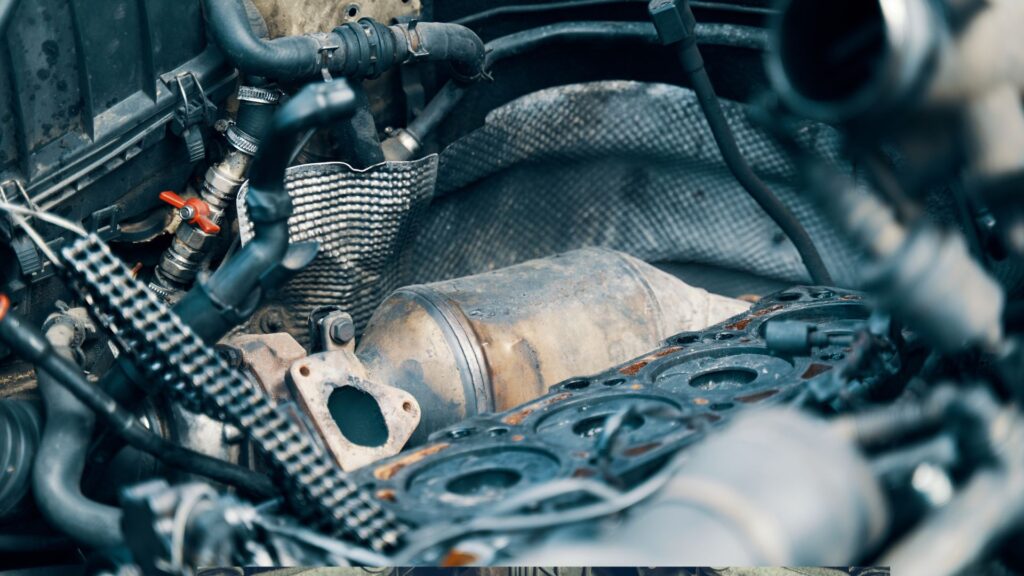
The catalytic converter is a key part of your vehicle’s exhaust system. It sits between the engine and the tailpipe, and its job is to convert harmful pollutants like carbon monoxide, hydrocarbons, and nitrogen oxides into less harmful gases before they exit the exhaust.
Without a functioning catalytic converter, your vehicle pumps more pollution into the air and will almost certainly fail an emissions test. Beyond the environmental impact, a failing converter can eventually affect engine performance and fuel efficiency.
Think of it as a filter. Over time, like any filter, it can wear out, clog, or get damaged.
Common Causes of a P0420 Code
Not every P0420 code means your catalytic converter needs to be replaced immediately. Several different issues can trigger this code, and a proper diagnosis is essential before assuming the worst.
- Failing catalytic converter – This is the most common cause. The internal honeycomb structure inside the converter breaks down over time, reducing its ability to process exhaust gases efficiently.
- Faulty oxygen sensor – If the oxygen sensor before or after the converter is sending inaccurate readings, the computer may flag P0420 even when the converter itself is fine. Replacing a bad sensor is a much less expensive fix.
- Exhaust leaks – A leak in the exhaust system between the engine and the catalytic converter can throw off the oxygen sensor readings, causing the code to appear.
- Engine issues – Problems like oil burning, coolant leaks into the combustion chamber, or misfires can damage the catalytic converter over time by exposing it to contaminants or excessive heat.
- Wrong or low-quality fuel – Using fuel that is not recommended for your vehicle can contribute to premature converter wear.
This is exactly why computer diagnostics matter. Without running a proper diagnostic check, you could end up replacing an expensive catalytic converter when the real problem is a $50 oxygen sensor.
Is It Safe to Drive With a P0420 Code?
This is one of the most common questions people ask, and the honest answer is: it depends.
In many cases, a P0420 code will not immediately leave you stranded. The car may drive normally at first, with no obvious performance symptoms. However, ignoring it for too long can lead to bigger problems.
If the catalytic converter is clogged or damaged badly enough, it can restrict exhaust flow to the point where the engine struggles to breathe. This can cause reduced power, poor fuel economy, rough idling, and in extreme cases, it can make the vehicle difficult to start.
The safest approach is to have the code diagnosed as soon as possible. Driving with a check engine light on for weeks or months, hoping it goes away, rarely ends well.
How Is a P0420 Code Diagnosed?
A proper diagnosis involves more than just reading the code with a scanner. Any shop worth trusting will take a few additional steps to confirm the root cause.
First, a technician will scan the vehicle for any other codes that might point to a related issue, like a misfire code or an oxygen sensor code. Multiple codes appearing together can tell a much clearer story.
Next, they will likely monitor the live data from the oxygen sensors while the engine runs. This shows whether the sensors are functioning correctly and whether the catalytic converter is actually underperforming or just getting bad data from a faulty sensor.
A visual inspection of the exhaust system will also check for leaks, physical damage to the converter, or signs of oil or coolant contamination.
At Don and Joe’s Auto Service in New Castle, IN, the team uses state-of-the-art diagnostic technology to make sure the right part gets replaced – not just the most expensive one. Accurate diagnosis protects you from unnecessary repairs and wasted money.
What Are the Repair Options for a P0420 Code?
Once the root cause is confirmed, the repair path becomes much clearer. Here is a general overview of what the fix might involve depending on what the diagnosis reveals.
- Oxygen sensor replacement – If a faulty O2 sensor is generating false readings, replacing it resolves the code without touching the converter. This is typically the least expensive fix.
- Exhaust leak repair – Sealing a leak in the exhaust system can correct the skewed sensor data and eliminate the P0420 code entirely.
- Engine repair – If the converter was damaged because of an underlying engine problem like oil consumption or coolant intrusion, that issue needs to be addressed first. Otherwise, a new converter will experience the same damage over time.
There is no one-size-fits-all answer here. The repair that makes sense for your vehicle depends entirely on what the diagnostic process uncovers.
How Much Does It Cost to Fix a P0420 Code?
Cost varies quite a bit depending on what is causing the code and what type of vehicle you drive.
An oxygen sensor replacement might run anywhere from around $100 to $300 including parts and labor, depending on the vehicle. An exhaust leak repair is usually on the lower end of the cost spectrum.
Catalytic converter replacement tends to be the most significant expense. The part itself can range widely based on whether you are looking at an original equipment manufacturer part or an aftermarket equivalent, and your vehicle’s make and model play a big role in pricing.
Getting a free estimate before committing to any repair is always a smart move. Don and Joe’s Auto Service offers free estimates when performing the work, so you know exactly what you are looking at before anything gets touched.
Can a P0420 Code Go Away on Its Own?
Occasionally, a P0420 code can be caused by something temporary, like a bad tank of fuel or a brief sensor glitch. In rare cases, the code might not come back after clearing it.
However, if the code returns – which it usually does – it means there is a real issue that needs attention. Do not count on it going away on its own. The check engine light is your vehicle’s way of asking for help, and ignoring it tends to make the underlying problem worse and more expensive over time.
Why Choose Don and Joe’s Auto Service for Catalytic Converter Diagnosis
Don and Joe’s Auto Service has been serving drivers in New Castle, IN since 1977. That kind of history matters because it means decades of hands-on experience with virtually every type of vehicle issue, including exhaust system and catalytic converter problems.
The ASE-certified technicians at Don and Joe’s understand that a P0420 code is not always a straightforward fix. They take the time to run a thorough diagnosis before recommending any repairs, which means you get an honest assessment and a repair that actually solves the problem.
With a 1-year warranty on most parts and labor, you also get peace of mind knowing the work is backed by a warranty after you leave the shop.
Frequently Asked Questions About Code P0420
Will P0420 cause my car to fail an emissions test?
Yes, in most cases it will. A check engine light that is on due to a stored diagnostic code will result in an automatic emissions test failure in areas that require testing. Getting the issue resolved before your test date is the way to go.
Can I fix P0420 myself?
If you are mechanically inclined and the issue turns out to be a simple oxygen sensor replacement, it is possible to do it yourself. However, catalytic converter replacement and exhaust leak repairs are better left to a professional, especially since proper diagnosis is critical to making sure you fix the right thing.
How long does a catalytic converter last?
Most catalytic converters are designed to last the lifetime of the vehicle under normal conditions, often 100,000 miles or more. However, engine problems, contaminated fuel, and physical damage can shorten that lifespan significantly.
Does P0420 always mean the catalytic converter is bad?
Not necessarily. A faulty oxygen sensor or an exhaust leak can trigger the same code. That is why a proper diagnosis from a qualified technician is so important before spending money on a converter replacement.
What happens if I keep driving with a P0420 code?
Short-term, you may not notice much difference. Long-term, a failing catalytic converter can reduce fuel efficiency, cause the engine to run poorly, and potentially lead to more expensive repairs down the road.
What to Do When Your Vehicle Shows Code P0420
A P0420 code is your vehicle’s way of flagging a problem with catalytic converter efficiency, but the actual cause could be anything from a bad oxygen sensor to a worn-out converter. The only way to know for sure is to have it properly diagnosed.
If you are in New Castle, IN, and that check engine light is on, schedule a visit with Don and Joe’s Auto Service. Reach out by calling 765-529-3555 or learn more about their computer diagnostics service to get an accurate answer and a repair done right the first time.