
7 Signs of Low Transmission Fluid You Shouldn't Ignore
Your car depends on dozens of fluids to keep everything running smoothly, but few are as critical as transmission fluid. When your transmission fluid is low, things can go wrong fast – and if you ignore the early warning signs, you could be looking at serious transmission damage down the road.
Whether you drive an automatic or manual transmission vehicle, knowing the symptoms of low transmission fluid can save you a lot of money and frustration. Here’s what to watch for.
Why Transmission Fluid Matters
Transmission fluids do a lot of heavy lifting inside your vehicle. They lubricate moving parts, help regulate heat, create the hydraulic pressure needed to shift gears, and reduce friction between transmission components.
Without enough fluid, those parts grind against each other, overheat, and wear down fast. Low transmission fluid can lead to erratic shifting, strange noises, and eventually a complete transmission repair or replacement.
Think of it like motor oil for your engine – if the level drops too low, damage to the vehicle follows quickly.
7 Common Signs of Low Transmission Fluid
1. Delayed or Rough Gear Shifts
One of the most noticeable signs your transmission fluid is running low is a change in how your car shifts. You might notice a hesitation when shifting from park to drive, or the gear changes feel jerky and rough instead of smooth.
This happens because transmission fluid provides the hydraulic pressure needed to engage each gear. When the fluid is low, that pressure drops and shifting becomes unpredictable. In automatic transmission vehicles especially, this symptom shows up early and clearly.
2. Slipping Gears
Gear slipping is when your transmission unexpectedly changes gears on its own, or struggles to stay in the right gear while driving. It can feel like your car is losing power mid-acceleration, which is unsettling – and dangerous.
Low fluid levels reduce the fluid pressure needed to hold gear positions properly. If your trans fluid is low enough, the transmission may slip frequently, making the vehicle feel inconsistent and unreliable on the road.
3. Unusual Noises While Driving
A healthy transmission runs quietly. If you start hearing whining, grinding, or clunking as your car shifts, that’s a red flag.
Low fluid means less lubrication, and without enough lubrication, metal parts inside the transmission begin to make contact in ways they should not. These unusual noises are your transmission asking for help before the wear and tear turns into something much worse.
4. A Burning Smell
A burning smell coming from under your hood or beneath the vehicle is never something to ignore. When transmission fluid gets too low, the remaining fluid overheats quickly because it cannot properly manage heat across all the transmission components.
Burnt-smelling fluid has a sharp, acrid odor that is different from a coolant or oil smell. If you catch this with your sense of smell while driving, pull over safely and check the fluid level as soon as you can. Continuing to drive risks a full overheat situation.
5. Transmission Fluid Leaking
If you notice a puddle forming on your driveway or parking spot, check the color. Automatic transmission fluid is typically bright red when fresh and becomes darker or brown as it ages.
A leak is often the root cause of low transmission fluid levels in the first place. The fluid may drip from a faulty seal, a loose transmission pan, or a damaged line. Finding a leak early and fixing it before the level is low is far cheaper than dealing with the damage that follows if you let it go.
6. Check Engine Light or Transmission Warning
Your vehicle is always monitoring itself. When the check engine light comes on, many drivers assume it is an engine issue – but the check engine light can also be triggered by transmission problems, including low fluid levels.
Some newer vehicles have a dedicated transmission warning light. Either way, do not ignore dashboard alerts. Get the vehicle scanned with a proper computer diagnostics check to find out what is going on before the problem gets worse.
7. Overheating Transmission
An overheating transmission is a serious sign of low transmission fluid that needs immediate attention. Transmission fluids are designed to absorb and disperse heat generated during normal driving conditions. When there is not enough fluid, the heat builds up rapidly.
You may notice sluggish performance, a burning odor, or your temperature gauge behaving oddly. In some cases, the vehicle may go into a protective “limp mode” to prevent further damage. If this happens, stop driving and have your transmission inspected right away.
How to Check Your Transmission Fluid
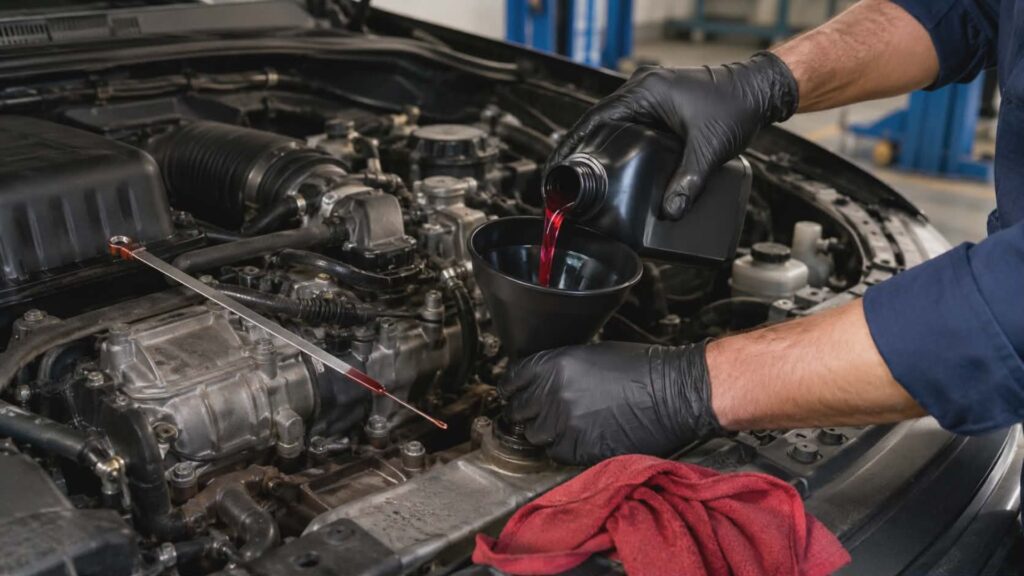
Checking your transmission fluid level is something many drivers can do at home. On most vehicles, you can use the transmission dipstick – similar to how you check the oil – to check the fluid level. Pull out the dipstick to check the level, wipe it clean, reinsert it, and pull it out again to
get an accurate reading.
If the fluid is low, add fluid using the correct fluid type recommended for your vehicle. Using the wrong fluid or the right fluid in the wrong amount can both cause problems. If you are unsure, it is always worth having a professional check your fluid and inspect for the source of any leak.
For vehicles like a CVT transmission or certain four-wheel drive systems, the process can be different and may require a technician to check the fluid and filter properly.
When to See a Professional
If you notice any of these warning signs, do not wait. Low transmission fluid levels and fluid issues can escalate quickly into costly repairs. When in doubt, have a trusted auto repair shop inspect your vehicle before small problems become big ones.
At Don and Joe’s Auto Service, serving Henry County, IN, the ASE-certified technicians have been diagnosing and fixing transmission problems since 1977. Whether you need a fluid change, a transmission repair, or just want to change the transmission fluid as part of routine preventive maintenance, they will give you an honest assessment and get your vehicle back on the road.
Call them at 765-529-3555 to schedule your service today.
Conclusion
Low transmission fluid symptoms are easy to miss if you are not paying attention, but they are your vehicle’s way of telling you something is wrong. From rough gear shifts to a burning smell to an active leak on your driveway, these signs exist to help you catch problems before they become catastrophic.
Check your transmission fluid regularly, stay alert to changes in your vehicle’s performance, and do not hesitate to bring your car to a trusted transmission shop when something feels off. Catching it early always saves you more in the long run.